
August 17, 2026
Why Does Water Taste Metallic? Common Causes
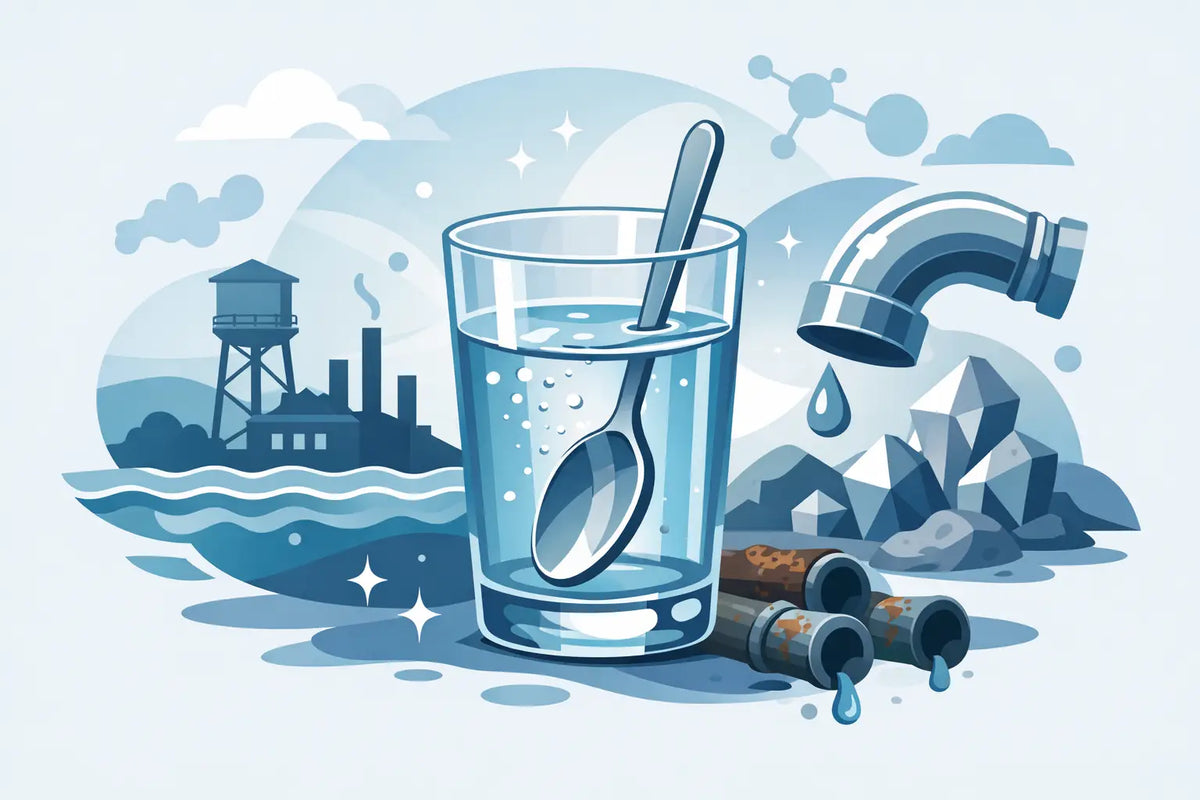
A glass of water that tastes like pennies, blood, or a stainless-steel spoon is hard to ignore. If you are asking, why does water taste metallic, the answer may be as simple as mineral-rich well water or as urgent as corrosion in household plumbing. The taste alone cannot identify the contaminant, but it is a useful signal to investigate before choosing a filter.
Metallic-tasting water is often caused by dissolved metals such as iron, copper, manganese, or zinc. It can also come from aging pipes, a water heater, treatment chemicals, or a change in your source water. The right solution depends on where the taste occurs, whether you use city or well water, and what a water test finds.
Why Does Water Taste Metallic?
Water picks up flavors from nearly everything it touches: natural rock and soil, pipes, plumbing fixtures, treatment equipment, and storage tanks. A metallic flavor usually means dissolved minerals or metals are reaching your tap, but concentration matters. Some substances can create a strong taste at levels below a health concern, while others need prompt testing even if the taste seems mild.
Iron and manganese in well water
Iron is one of the most common reasons well water has a metallic, rusty, or slightly bitter taste. It may leave orange, red, brown, or black staining in sinks, toilets, laundry, and ice makers. Manganese can create a similar taste and dark staining, often appearing alongside iron.
These minerals occur naturally in groundwater. A standard sediment filter may catch visible particles, but dissolved iron and manganese usually require a system designed to treat them. Depending on the water chemistry, that may involve oxidation, specialized filtration media, or a properly sized well water treatment system.
Copper from plumbing
Copper pipes can release copper into water when the water is corrosive, acidic, or has been sitting in the plumbing for several hours. The flavor may be bitter, sharp, or coin-like. Blue-green staining around drains, faucets, or fixtures can be another clue.
Copper is commonly associated with newer plumbing as well as older systems under corrosive conditions. If cold water tastes metallic first thing in the morning but improves after it runs for a minute or two, plumbing contact time is a likely factor. A test can confirm whether copper is present and help determine whether filtration, corrosion control, or plumbing repair is the better long-term answer.
Iron, galvanized pipe, or aging plumbing
Older galvanized steel pipes can corrode internally and contribute iron, zinc, and sediment to household water. This problem may affect one area of a home more than another, especially where old pipe sections remain after a remodel.
If the taste is isolated to one sink, the issue may be a faucet aerator, supply line, or a short section of plumbing rather than the incoming water supply. Removing and cleaning the aerator can be a sensible first check. Persistent metallic taste, discoloration, or reduced flow deserves a closer inspection.
A water heater issue when only hot water tastes bad
When cold water tastes normal but hot water tastes metallic, look at the water heater. Sediment buildup, corrosion inside the tank, or a deteriorating anode rod can change hot water taste and odor. This is especially common in areas with hard water or in heaters that have not been flushed regularly.
A drinking water filter may improve the water at one faucet, but it will not repair a corroding water heater. Have the heater evaluated if the problem is limited to hot water, particularly if you also notice rust-colored water, popping sounds, or declining hot-water performance.
City water changes and treatment chemicals
Municipal water systems can change source water, adjust disinfection practices, or perform seasonal maintenance. Chlorine or chloramine may be described as chemical, medicinal, or metallic by some people. These disinfectants serve an important public-health purpose, but they can affect taste.
An activated carbon filter is often a practical choice for improving chlorine-related taste and odor. However, carbon filtration is not a one-size-fits-all treatment for dissolved metals. If the metallic taste continues after a carbon filter, testing helps prevent spending money on the wrong system.
Lead is not something you can taste reliably
Lead is a serious concern in some older homes and buildings, but it does not have a dependable taste, color, or odor. A metallic taste does not prove lead is present, and clean-tasting water does not rule it out.
Homes with older service lines, older plumbing components, or brass fixtures should consider a targeted lead test, especially when water has been standing overnight. Until results are available, use cold water for drinking and cooking, then flush the line until the water runs cold. Hot tap water can dissolve metals more readily and should not be used for food preparation.
How to Narrow Down the Source
A few observations can make the next step much clearer. First, compare cold and hot water. If the taste appears only in hot water, the heater is the likely starting point. Next, compare more than one faucet. A whole-home issue points toward the source water or main plumbing, while a single-fixture issue points toward local plumbing or that faucet.
Also consider timing. Water that tastes metallic only after sitting overnight may be picking up metals from pipes. Water that tastes bad all day, at every fixture, may contain naturally occurring iron or manganese, or it may reflect a broader source-water change. Well owners should pay particular attention after heavy rain, flooding, drought, well repairs, or changes in water pressure.
Visual clues matter too. Orange or brown stains suggest iron. Black or dark brown staining can indicate manganese. Blue-green stains may point to copper. White scale is more often associated with hardness, which does not usually create a strong metallic taste but can complicate treatment and shorten the life of water-using equipment.
Test Before You Treat
Taste is a reason to test, not a diagnosis. A useful water test should match your water source and the signs you are seeing. For private wells, testing often starts with iron, manganese, pH, hardness, total dissolved solids, bacteria, and any locally relevant contaminants. For city water, a test may focus on copper, lead, iron, pH, chlorine or chloramine, and water quality at the tap.
Use a certified laboratory when you need dependable results for health-related decisions. Test samples should be collected according to the lab's instructions, since a first-draw sample and a flushed sample can reveal different things about your plumbing. If you operate a restaurant, rental property, office, or other facility, testing at multiple points of use may be necessary because water quality can vary across the building.
Choosing the Right Filter for Metallic-Tasting Water
The best filter depends on what the test identifies and where you need treatment. A point-of-use reverse osmosis system can reduce a broad range of dissolved contaminants at a dedicated drinking-water faucet. It is often a strong fit when the concern is drinking and cooking water, including dissolved metals identified at that location.
For iron, manganese, sediment, or a metallic taste throughout the home, a whole-house system is usually the better path. These systems protect showers, appliances, laundry, and fixtures as well as drinking water. The treatment media and flow rate must be matched to the water test and household demand. An undersized system can create pressure loss or allow taste and staining to return before the media has done its job.
Activated carbon filtration is valuable for chlorine, chloramine, and many taste-and-odor concerns. It may be included with other treatment stages, but it should not be expected to solve significant dissolved iron, manganese, or corrosion by itself. If the water is acidic and causing copper corrosion, neutralization or corrosion control may be needed before, or alongside, filtration.
For commercial kitchens, laboratories, and multi-use facilities, the same principle applies at a larger scale. Water quality, daily usage, peak flow, equipment needs, and local plumbing all affect system design. A system that improves taste at one sink may not adequately protect ice machines, steam equipment, dishwashers, or beverage service.
When to Act Quickly
Arrange testing promptly if metallic water is paired with blue-green staining, rust-colored water, black staining, a sudden major change in taste, or suspected lead plumbing. Well owners should also act quickly after flooding or any event that could affect the well's integrity. If water has an unusual taste along with gastrointestinal illness or a strong sewage-like odor, stop using it for drinking and contact a qualified local professional or public health authority.
A metallic taste is not always an emergency, and it is not always a filtration problem. But it is worth treating as useful information. Start with the source, verify it with the right test, and choose treatment that solves the actual problem instead of masking the flavor. PureWaterGuys can help match the results to a practical system that protects the water your family, guests, or customers rely on every day.