
July 18, 2026
Well Water Bacteria Treatment That Works
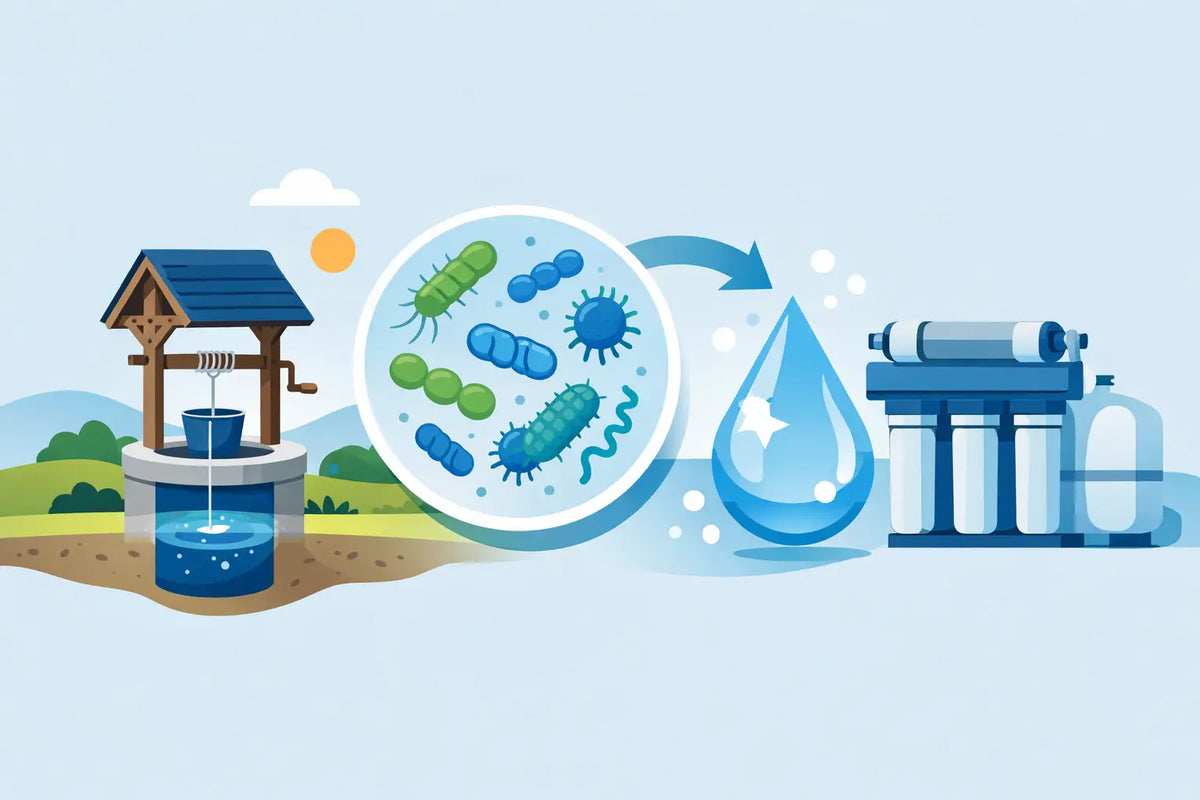
A positive bacteria result changes how you use your water immediately. Well water bacteria treatment is not a matter of adding a filter and hoping for the best. It starts with identifying the organism, finding how it entered the well system, and choosing a treatment method that protects every tap your family depends on.
If a laboratory report shows E. coli, do not drink the water, make ice with it, brush teeth with it, or use it for food preparation until the problem is addressed. Total coliform calls for attention too, but it does not always mean sewage contamination. The distinction matters because the correct response depends on what the test found and whether the issue is a one-time intrusion or an ongoing water-quality problem.
Start Well Water Bacteria Treatment With Testing
A proper water test is the foundation of a reliable treatment plan. Request a certified lab test for total coliform and E. coli at minimum. If your water has a rotten-egg odor, orange staining, slime in toilet tanks, or recurring bacterial results, test for iron, manganese, pH, hardness, turbidity, and sulfur bacteria as well.
These results tell you more than whether bacteria are present. They reveal the conditions that can interfere with treatment. For example, a UV sterilizer can be highly effective against microorganisms, but cloudy water, iron, manganese, or hardness scale can prevent UV light from reaching them. A system sized only around the bacteria result can leave the underlying treatment obstacle in place.
Take the sample carefully. Use the lab-provided sterile bottle, avoid touching the inside of the cap or bottle, and follow the required delivery time. A poorly collected sample can create a misleading result and send you toward the wrong solution.
Total Coliform vs. E. Coli
Total coliform is a broad group of bacteria commonly found in soil, vegetation, surface water, and animal waste. A positive total coliform result suggests that the well or plumbing system may be vulnerable to contamination. It does not by itself confirm a human or animal waste source.
E. coli is more urgent. Its presence indicates fecal contamination and a greater potential for disease-causing organisms. Households with infants, older adults, pregnant people, or anyone with a weakened immune system should be especially cautious. Follow local health department guidance, and use an alternate safe water source while the water is being corrected and retested.
Find the Source Before You Treat It
Bacteria often enter a private well after a predictable event: flooding, heavy rain, recent well work, a damaged well cap, a cracked casing, or a nearby septic issue. Treatment is necessary, but treating without fixing the entry point can turn a temporary problem into a repeating expense.
Inspect the wellhead and the area around it. The cap should be secure and vented properly, with no gaps that allow insects, small animals, or runoff to enter. The casing should extend above grade, and the ground should slope away from the well rather than channeling water toward it. Keep chemicals, manure, pet waste, and other contamination sources away from the well area.
If the well was flooded, the casing is damaged, or bacterial results continue after disinfection, contact a qualified well contractor. A water treatment system manages water quality at the point of use. It cannot repair a compromised well structure, faulty septic system, or an underground source of contamination.
When Shock Chlorination Is the Right First Step
Shock chlorination is a high-dose chlorine treatment used to disinfect the well, pressure tank, plumbing, and related components. It is often the right first response after a confirmed bacterial event, well repair, flooding, or a long period of disuse.
This is a corrective treatment, not always a permanent one. The process requires the right chlorine concentration, adequate contact time, and thorough flushing afterward. Too little chlorine may not disinfect the system. Too much, or incorrect handling, can damage components, create strong odors, and send chlorinated water where it should not go, including sensitive septic systems or waterways.
After shock chlorination, wait until the chlorine has cleared and collect a follow-up sample according to local guidance. If the retest is clear and the source has been corrected, ongoing equipment may not be necessary. If bacteria return, the property likely needs continuous disinfection and possibly pretreatment.
Continuous Bacteria Treatment Options for Well Water
For recurring contamination or a well that is difficult to protect from outside influence, whole-house treatment provides more dependable protection. The best system depends on water chemistry, flow rate, plumbing layout, and whether you need a disinfectant residual throughout the system.
UV Water Treatment
A whole-house UV sterilizer uses ultraviolet light to inactivate bacteria, viruses, and other microorganisms as water passes through the chamber. It does not add chemicals or change the taste of the water. For many homes with clear, properly prefiltered well water, UV is a practical long-term solution.
The trade-off is that UV provides no residual protection after the chamber. If bacteria are growing in downstream plumbing, a storage tank, or a poorly maintained system, UV alone may not solve the full problem. The lamp, sleeve, and prefilters also need regular maintenance. A UV system should be sized for your actual peak flow rate, not only average daily water use.
Chlorine Injection and Contact Tanks
Chlorine injection adds a controlled dose of disinfectant to the incoming water. A contact tank gives chlorine time to work before water reaches the home. This approach is well suited to persistent bacteria, sulfur odors, iron bacteria, or applications where a disinfectant residual is useful.
Because chlorine can affect taste and odor, many systems include a carbon filter after the contact tank. Carbon removes residual chlorine and can improve water quality at the tap. This configuration takes more space and requires monitoring, but it is often the stronger choice for challenging or recurring well-water contamination.
Filtration That Supports Disinfection
Sediment filtration, iron reduction, manganese treatment, softening, and carbon filtration each have a role, but none should be mistaken for a guaranteed bacteria barrier unless specifically designed and validated for that purpose. Standard sediment filters trap particles. They do not reliably disinfect water and can become a place for bacterial growth if cartridges are neglected.
Pretreatment is often what makes UV or chlorine treatment perform as intended. Removing sediment improves UV transmission. Reducing iron and manganese helps prevent staining and protects equipment. Addressing sulfur can improve odor while making the overall system easier to maintain.
Choosing the Right System for Your Property
A small home with a clear-water bacteria result may need sediment filtration followed by a properly sized UV unit. A property with repeated coliform, sulfur odor, iron staining, and variable water conditions may be better served by chlorine injection, a contact tank, filtration, and carbon polishing. There is no single well water bacteria treatment package that fits every well.
System sizing matters as much as system type. A treatment system must handle the peak gallons per minute needed when showers, appliances, and fixtures run at the same time. Undersized equipment can reduce pressure or allow water to move through too quickly for treatment to work effectively. Commercial kitchens, rental properties, and light industrial facilities need additional attention to peak demand, service intervals, and local compliance requirements.
Before buying equipment, gather your water report, well pump flow rate if known, household size, plumbing size, and a description of any odor, staining, or recent well events. This information allows a treatment specialist to match the system to the problem instead of selling a generic solution.
Keep the Protection Working
Treatment only works when it is maintained. Replace sediment and carbon cartridges on schedule, clean or replace UV sleeves and lamps as recommended, verify chemical feed settings, and service filters or media tanks when performance declines. Keep records of service dates and water test results.
Retest private well water at least once each year and after flooding, plumbing work, a change in taste or odor, or an unexplained illness in the household. Testing confirms that your system is doing its job and gives you an early warning before a minor well issue becomes a larger one.
Pure Water. Protected Family. A clear test result after the right treatment is more than a box to check. It is the confidence to fill a glass, make dinner, and use every faucet in your home knowing your water plan was built for the conditions at your well.