
September 10, 2026
A Water Test Review for Better Treatment Choices
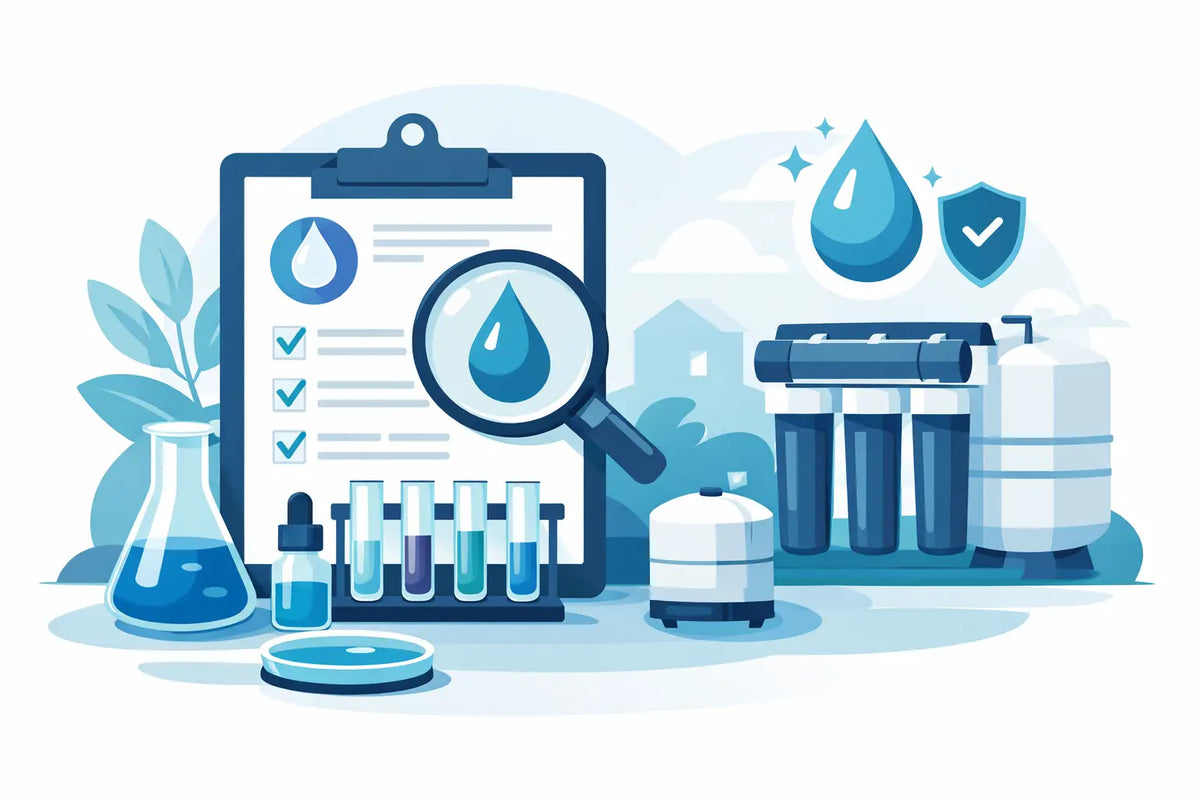
A water test review should do more than hand you a page of numbers. It should explain what is in your water, whether the results matter for your family or property, and which treatment approach solves the actual problem. The right answer may be a drinking water system, a whole-house filter, a softener, or no treatment at all. That distinction protects your budget as much as it protects your water.
What a Water Test Review Should Tell You
Water quality results can feel technical because they often include units, abbreviations, and thresholds that do not immediately translate to daily life. A useful review turns those findings into clear decisions: what needs attention now, what should be monitored, and what type of system is appropriate.
Start with the source of your water. Municipal water is treated before it reaches the home, but its quality can still change as it travels through distribution lines and household plumbing. Private well water is not regulated in the same way, which makes routine testing especially valuable. A commercial property may have additional concerns, including scale control for equipment, water used in food service, or consistent water quality for manufacturing and laboratory applications.
The most relevant results depend on your concern. If your dishwasher leaves white spots, hardness and total dissolved solids may be the priority. If water smells like rotten eggs, test results may point toward hydrogen sulfide, sulfur bacteria, iron, or manganese. If you are concerned about contaminants such as lead, arsenic, nitrate, or PFAS, the test must specifically include those analytes. A basic test does not automatically screen for every possible contaminant.
Reading the Results in Practical Terms
A number outside a recommended level does not always mean the water is unsafe, and a result within a guideline does not always mean it meets your household's preferences. Treatment decisions should account for health considerations, plumbing protection, taste, odor, appliance performance, and your intended use of the water.
Hardness, calcium, and magnesium
Hard water is generally caused by dissolved calcium and magnesium. It is not usually a health emergency, but it can be expensive over time. Scale can build up on faucets, reduce water heater efficiency, shorten the life of appliances, and make soap less effective.
For hardness, a conventional ion-exchange water softener is often the most effective choice when scale reduction is the goal. Salt-free conditioners can be a fit for some homeowners looking to manage scale behavior without adding salt, but they do not remove hardness minerals in the same way. A water test review should make that trade-off clear before you buy.
Chlorine, chloramine, taste, and odor
Municipal water often contains chlorine or chloramine for disinfection. These disinfectants serve an important purpose in the distribution system, but many people prefer to reduce their taste and odor at the tap, in the shower, or throughout the house.
Carbon filtration is commonly used for chlorine taste and odor. Chloramine can require more specific media and adequate contact time, particularly in a whole-house application. A small under-sink filter may improve drinking water, while a properly sized whole-house carbon system can improve water at showers, sinks, and appliances. The better option depends on where you want the benefit.
Iron, manganese, and sulfur odor
Orange or brown staining, metallic taste, black residue, and rotten-egg odor are common water quality complaints, especially with private wells. These issues can overlap, so selecting equipment based on odor alone can lead to disappointing results.
Iron and manganese may require oxidation and filtration, specialized media, or a system designed around the water's pH and dissolved oxygen levels. Hydrogen sulfide may call for aeration, oxidation, carbon filtration, or a combination system. Bacteria can also contribute to odor concerns, which is why well water testing may include microbiological analysis. The right system is based on the complete water profile, not one symptom.
Lead, arsenic, nitrate, and PFAS
Some contaminants require a more focused conversation because their presence is not always visible, detectable by taste, or predictable from a general test. Lead can enter water through plumbing components. Arsenic and nitrate may occur naturally or through environmental sources. PFAS testing requires specific laboratory methods and should not be assumed from a standard water report.
Reverse osmosis is often a strong point-of-use option for reducing many dissolved contaminants in drinking and cooking water when the system is selected and maintained appropriately. Some homes may need whole-house treatment in addition to a drinking water system, particularly when the concern affects water used beyond the kitchen. The system choice should reflect the contaminant, the level found, household water use, and the applicable treatment claims of the equipment.
Match Treatment to the Problem, Not the Product
The fastest way to overspend on water treatment is to start with a product category instead of the test results. A whole-house filter is not automatically the best answer for every concern, and reverse osmosis is not meant to replace every type of well-water treatment.
A practical treatment plan may include one or more stages. For example, a homeowner with hard municipal water may benefit from a sediment prefilter, a softener for scale control, and carbon filtration for chlorine taste and odor. A well owner with iron, sulfur, and bacterial concerns may need a different sequence, potentially including oxidation, filtration, and UV disinfection. Each component has a job, and the order matters.
For a restaurant, apartment property, or light industrial facility, flow rate and peak demand become just as important as the lab report. Equipment that works at a kitchen sink may be undersized for a building with multiple fixtures or high-volume equipment. Commercial treatment should be specified around incoming water quality, daily demand, pressure, discharge requirements, and service access.
When a Home Test Kit Is Enough and When It Is Not
Home test kits can be useful screening tools. They may help identify basic concerns such as pH, hardness, chlorine, nitrate, or iron, depending on the kit. They are convenient when you want an initial snapshot or want to track a known issue between more detailed tests.
However, a strip test cannot replace laboratory analysis for every decision. If you are evaluating lead, arsenic, PFAS, bacteria, or a persistent well-water problem, use a qualified lab test that includes the specific contaminants you need to understand. Sampling technique matters too. A first-draw sample for lead is different from a flushed sample, and improper collection can distort the result.
It also helps to test at the right time. Well owners should consider annual testing for common concerns and additional testing after flooding, a plumbing change, a new odor, a change in taste, or a nearby land-use change. Municipal-water customers may want testing when they notice unusual symptoms, move into an older home, replace plumbing, or have a specific health concern.
Questions to Ask Before You Choose a System
Before purchasing, look beyond the headline contaminant. Ask whether the test was taken from the correct location, whether the result is dissolved or total, and whether water chemistry may affect treatment performance. High sediment can clog a fine filter quickly. Low pH can contribute to corrosion. Very high hardness can affect reverse osmosis membrane performance without appropriate pretreatment.
You should also consider maintenance from the beginning. Filters need replacement cartridges or media, softeners need salt or periodic service, and UV systems need a properly functioning lamp and clean water for effective disinfection. A lower upfront price is not always the lower long-term cost if the system is undersized or requires frequent replacement.
At Pure Water Guys, the goal is to connect the water problem to the treatment system, with support for everything from a replacement filter to a customized commercial specification. Bring your results, your property details, and your priorities to the conversation. That gives you a stronger basis for choosing equipment that performs as expected.
Your water report is not a verdict. It is a starting point for making a careful, informed choice that supports better drinking water, protected plumbing, and confidence every time you turn on the tap.