
September 18, 2026
Water Distiller Versus Reverse Osmosis: Which Fits?
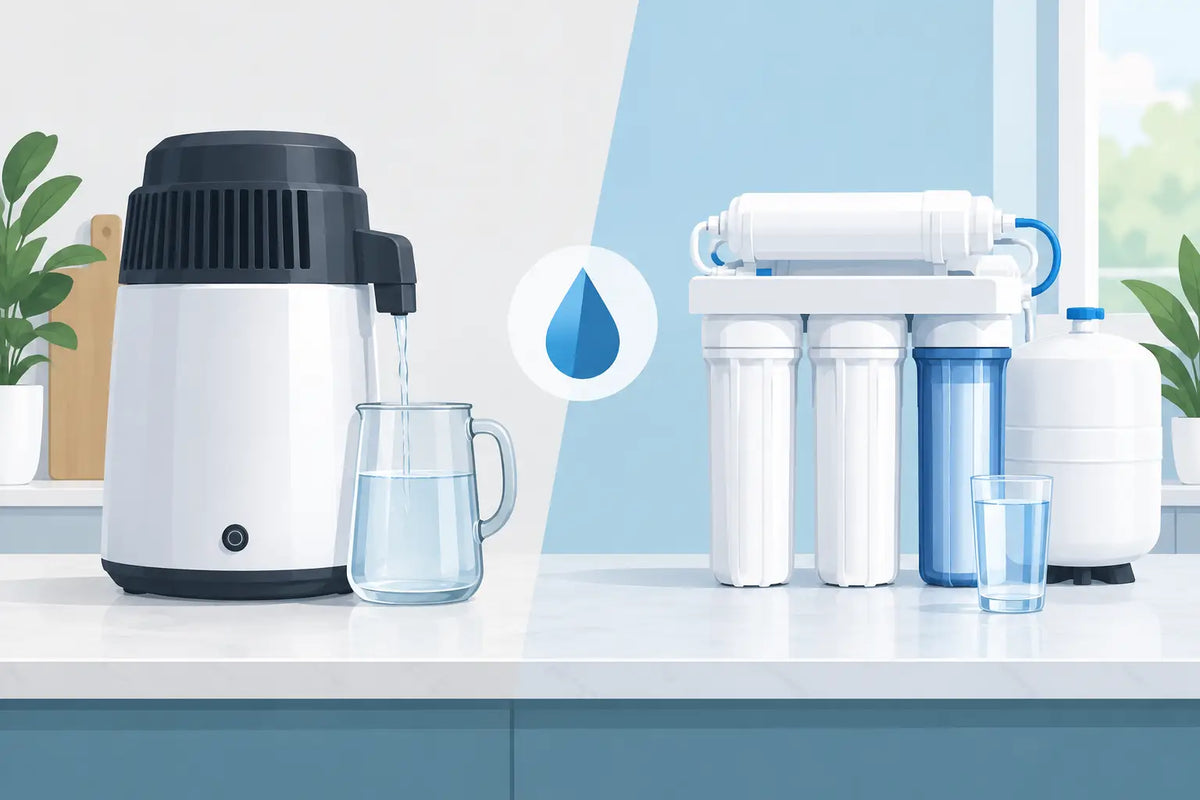
A countertop distiller can turn tap water into a very clean glass of water, but it does so slowly, with heat and a noticeable demand for electricity. A reverse osmosis system delivers filtered drinking water on demand from a dedicated faucet, yet it produces some reject water in the process. In the water distiller versus reverse osmosis decision, the better choice depends less on which technology sounds purer and more on your water source, household habits, and the contaminants you need to address.
For most homes, the question is practical: What will protect the water your family drinks while fitting the way you actually use your kitchen? For a lab, small business, or specialized application, purity specifications and production volume may matter even more.
Water Distiller Versus Reverse Osmosis: The Core Difference
A water distiller uses heat. It boils water into steam, then cools that steam so it condenses into a separate container. Most dissolved minerals, salts, heavy metals, and many other nonvolatile contaminants are left behind in the boiling chamber.
Reverse osmosis, often called RO, uses water pressure to push water through a semipermeable membrane. The membrane rejects a broad range of dissolved contaminants, while prefilters and postfilters commonly address sediment, chlorine, taste, and odor. The treated water is stored in a small tank or produced tanklessly, depending on the system.
Both technologies can substantially reduce total dissolved solids, or TDS. They are not identical solutions, however. Distillation separates water through a phase change. RO filters water through a membrane system. That difference affects speed, maintenance, water use, installation, and which setup makes sense for your property.
What Each System Can Reduce
When properly designed and maintained, both distillers and reverse osmosis systems can reduce many dissolved substances that conventional carbon filters may not address well. This can include minerals, salts, lead, arsenic, nitrates, and other dissolved contaminants. Actual performance depends on the specific unit, incoming water quality, operating conditions, and third-party certifications for the claim in question.
Distillation is especially effective at removing substances that do not evaporate with water. It also removes the minerals that create hardness. But some volatile organic compounds can vaporize along with the water. A distiller with an activated carbon postfilter is better equipped to capture many of those compounds before they reach the finished water.
RO systems pair multiple treatment stages for a broader everyday drinking-water approach. A sediment prefilter protects the equipment from particles. Carbon filtration can reduce chlorine and chloramine, which can damage standard RO membranes and affect taste. The RO membrane handles dissolved contaminants, and a final carbon filter improves the water at the faucet. Some systems also add UV treatment or specialized media when microbial concerns or particular contaminants call for another layer of protection.
Neither option should be selected based on a generic contaminant list alone. Private well owners may need to address iron, manganese, sulfur, bacteria, or unusually high TDS before an RO system can perform reliably. Municipal-water customers may be focused on chlorine taste, lead, PFAS, or nitrate. A current water test is the strongest starting point.
Daily Use: Speed, Volume, and Convenience
This is where many buyers find a clear answer. A countertop distiller usually makes roughly one gallon at a time and can take several hours per cycle. You fill it, run it, let it cool, clean the chamber, and store the finished water. That routine can work well for a single person, occasional use, CPAP humidifier water, certain appliance needs, or a household with modest drinking-water demand.
It becomes less convenient when a family drinks several gallons a day, fills cooking pots, makes coffee, or wants filtered water without planning ahead. Distillers also release heat into the room and make some operating noise, factors that are easy to overlook before purchase.
An under-sink RO system is designed for frequent household use. Once installed, it supplies filtered water from a dedicated faucet whenever you need it. Tank systems hold a reserve of treated water, while tankless models can provide a higher flow rate with a smaller footprint. They are generally a better fit for families, kitchens, break rooms, restaurants, and offices that need dependable drinking water throughout the day.
RO water is usually not intended to supply an entire home. Treating every shower, toilet, laundry load, and outdoor spigot with RO would be expensive and inefficient. Whole-house filtration, softening, UV, or well-water treatment may be needed upstream, while RO handles the water you drink and cook with.
Cost and Maintenance Trade-Offs
A distiller often has a lower upfront equipment cost and does not require plumbing. Its ongoing costs come from electricity, cleaning, and periodic carbon filter replacement if the unit uses one. Mineral scale and residue collect in the boiling chamber, so regular cleaning is part of ownership. Ignoring it can reduce efficiency and make the unit harder to maintain.
RO requires a greater initial investment because it includes filters, a membrane, plumbing connections, and sometimes professional installation. Replacement prefilters and postfilters are typically changed on a regular schedule, while the membrane lasts longer but eventually needs replacement. The exact schedule depends on water quality and usage.
The overlooked RO trade-off is reject water. As the membrane separates dissolved contaminants, it sends a concentrated stream to the drain. Modern high-efficiency systems can improve the recovery rate significantly, but there is still wastewater. If water conservation is a primary concern, compare each system's stated recovery ratio rather than assuming all RO units perform the same.
A distiller does not send a continuous reject stream down the drain, but it uses electricity to create heat. The real operating-cost comparison varies by local utility rates, water quality, household usage, and system efficiency.
Taste, Minerals, and Water Preferences
Distilled water has very low mineral content and a clean, neutral profile. Some people enjoy that taste; others describe it as flat. Reverse osmosis water is also low in dissolved solids, though its final taste depends on the postfilter, incoming water, and whether the system includes a remineralization stage.
Remineralization adds measured calcium and magnesium after RO filtration. It can raise pH modestly and create a fuller taste for people who prefer water that is not completely stripped of minerals. It is a preference feature, not a replacement for nutrition. Most dietary minerals come from food, not drinking water.
If your concern is hard-water scale, remember that a drinking-water RO system only treats the water at its faucet. It will not protect a water heater, dishwasher, shower glass, or plumbing fixtures. A whole-house softener or salt-free scale-control strategy may be the right companion solution, depending on your goals and water chemistry.
Which System Is Right for Your Situation?
A distiller can be the sensible choice when you need small quantities of highly purified water, cannot or do not want to modify plumbing, and are comfortable running batches. It may also suit certain technical uses where low-mineral water is required. Check the equipment manufacturer's guidance for any medical, laboratory, or appliance-specific application.
Reverse osmosis is usually the stronger choice for households that want convenient, high-quality drinking water every day. It is particularly practical for families concerned about dissolved contaminants, people who dislike the taste of municipal water, and businesses that need a consistent supply for staff or customers. It can also be combined with targeted treatment when your test results identify PFAS, chlorine, lead, or well-water concerns.
For a property with complex water, do not ask one small drinking-water system to solve every problem. Pretreatment can be essential. Sediment, hardness, iron, sulfur, and disinfectant levels all affect equipment performance. Matching the system to the problem helps protect your investment and keeps maintenance predictable.
Start With Your Water, Not the Technology
The most reliable purchase decision begins with the water coming into your home or facility. Review your municipal water report, test private well water through a qualified source, and consider what you want to improve: contaminant reduction, taste, scale prevention, convenience, or production volume. Those needs may point to a distiller, an RO system, or a combination of whole-home and point-of-use treatment.
Pure Water Guys helps homeowners and businesses sort through those details before they buy. A system that fits your water and your daily routine is easier to maintain, easier to trust, and far more likely to deliver the clean water you expect.