
August 15, 2026
Water Contaminants Homeowners Should Test For
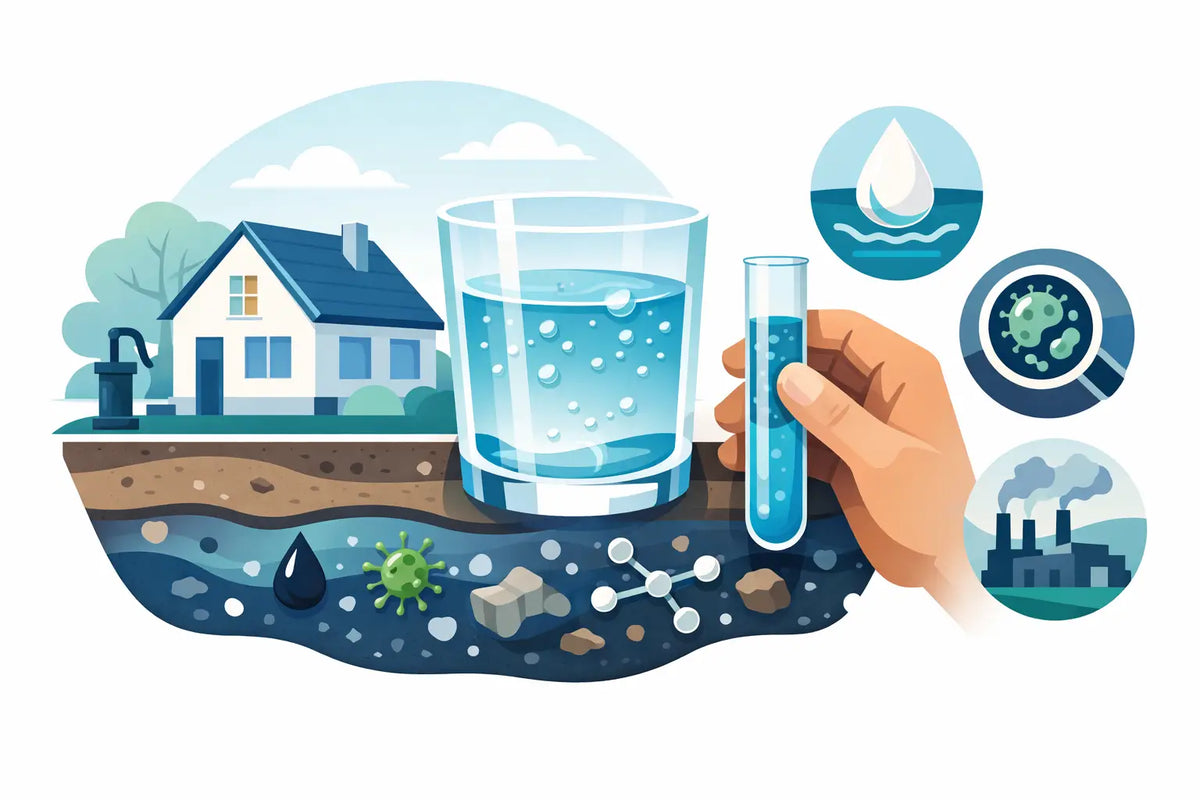
A glass of water can look clear, smell normal, and still carry a problem worth addressing. The water contaminants homeowners should test for depend on where the water comes from, the age of the plumbing, nearby land use, and what has changed in the home. A proper test replaces guesswork with a clear treatment plan, whether you need cleaner drinking water at one sink or protection throughout the house.
Start With Your Water Source and Your Home
City water and private well water need different testing strategies. Public water utilities are required to monitor many contaminants and provide annual water quality reports, but that report reflects water as it leaves the utility system. It cannot account for lead service lines, old pipes, a private building's plumbing, or conditions unique to your home.
Private well owners carry more responsibility. Well water is not federally regulated at the tap, and its quality can shift after heavy rain, flooding, nearby construction, a plumbing repair, or changes in agricultural activity. Test a private well at least once a year for core safety concerns, and sooner if water develops an unusual taste, odor, color, or sediment.
Your home also provides useful clues. Blue-green staining can point to copper corrosion. Orange or brown stains often suggest iron or manganese. A rotten-egg odor may indicate hydrogen sulfide or sulfur-related bacteria. White scale on fixtures is a hard-water signal. These clues are helpful, but they are not a diagnosis. Testing tells you what is actually in the water and how much is present.
Water Contaminants Homeowners Should Test First
A comprehensive test is not always necessary on day one, but a few categories deserve priority because they affect health, plumbing, appliances, or daily water use.
Coliform Bacteria and E. coli
Bacteria testing is essential for private wells and is sensible after a plumbing disruption, flood, well repair, or loss of pressure. Total coliform bacteria indicate that the water system may be vulnerable to contamination. E. coli is a more urgent finding because it can signal fecal contamination and a meaningful risk of illness.
Do not attempt to solve a positive bacteria result by selecting equipment at random. The source may be a damaged well cap, poor drainage, a cracked casing, or a septic issue. Disinfection may be part of the answer, and a properly sized UV system can provide ongoing protection, but the underlying pathway for contamination should be addressed too.
Lead and Copper
Lead usually enters drinking water from household plumbing, solder, fixtures, or service lines rather than the water source itself. Homes built before lead restrictions took effect, and homes with unknown service-line materials, should give lead testing serious attention. Infants, children, and pregnant people are especially vulnerable to lead exposure.
Copper can also leach from plumbing, particularly where water is corrosive. Low pH, low alkalinity, and certain mineral balances can make water more likely to pick up metals as it moves through pipes. A certified point-of-use reverse osmosis drinking water system is often a strong option for reducing lead at a kitchen tap, while corrosion control may be necessary when the plumbing chemistry is driving the issue.
Nitrates and Nitrites
Nitrates are a high-priority well-water test, especially in rural areas near fertilizer use, livestock operations, septic systems, or shallow wells. They are colorless and tasteless, so your senses will not warn you. Elevated nitrate levels are particularly dangerous for infants because they can interfere with the blood's ability to carry oxygen.
Standard carbon filters are not a reliable answer for nitrates. Reverse osmosis is commonly used for drinking water reduction, while larger treatment approaches may be appropriate when nitrate levels are high and water demand extends beyond one faucet. Test first, then match the system to the concentration and the household's needs.
PFAS
PFAS, often called "forever chemicals," have drawn attention for good reason. These synthetic compounds have been associated with industrial uses, firefighting foam, stain-resistant treatments, and consumer products. They can persist in the environment, and exposure may occur through public water or private wells.
PFAS testing is especially worth considering near airports, military installations, industrial areas, landfills, and known contamination sites. It can also make sense for homeowners who want a clearer picture of their drinking water beyond standard municipal reporting. The right treatment depends on the specific PFAS compounds and concentrations found. Certified activated carbon, specialized media, and reverse osmosis systems can be effective choices, but performance claims should match the test result and the intended use.
Arsenic
Arsenic occurs naturally in some groundwater and can also be linked to industrial activity. It has no reliable taste, smell, or color. Long-term exposure is the concern, which is why testing matters even when well water seems perfectly fine.
Arsenic treatment requires precision. Different forms of arsenic respond differently to treatment, and water chemistry can affect performance. A lab result that identifies the arsenic level, along with pH, iron, and other relevant chemistry, helps determine whether reverse osmosis, adsorptive media, or a whole-house system is the better fit.
Iron, Manganese, and Hydrogen Sulfide
These contaminants are often more obvious than lead or nitrates, but they should not be dismissed as merely cosmetic. Iron and manganese can stain laundry, clog fixtures, foul water heaters, and shorten the life of appliances. Hydrogen sulfide creates the familiar rotten-egg odor and can contribute to corrosion.
The treatment trade-off is straightforward: a simple sediment filter may catch visible particles, but dissolved iron or manganese usually requires oxidation and filtration. Water with sulfur odor may need aeration, oxidation, specialty media, or chlorination followed by filtration. The correct system depends on concentration, pH, water flow, and whether iron bacteria are also present.
Hardness, pH, and Total Dissolved Solids
Hardness is not generally considered a health contaminant, but it is one of the most practical water-quality measurements for homeowners. Calcium and magnesium create scale in water heaters, dishwashers, coffee makers, shower doors, and plumbing fixtures. Testing hardness helps determine whether a water softener, salt-free conditioner, or no treatment at all makes the most sense.
pH and total dissolved solids, or TDS, add useful context. Low pH can contribute to corrosive water and metal leaching. High TDS can affect taste and may indicate elevated mineral content, though a TDS reading alone cannot identify what those dissolved solids are. It is a screening measurement, not a substitute for contaminant-specific testing.
When a Basic Test Is Not Enough
Some situations call for a more targeted water analysis. If you live near agricultural land, ask about pesticides and herbicides. If your property is near fuel storage, manufacturing, or a dry-cleaning site, volatile organic compounds may be relevant. Homes with plumbing concerns should consider a first-draw lead sample, which captures water that has sat in the pipes and better reflects potential exposure at the tap.
A change in water is another reason to test. Cloudiness, new staining, sudden odor, reduced water pressure, recurring filter clogging, or unexplained gastrointestinal illness in the household should move testing ahead of equipment shopping. If there is an immediate health concern, follow local public health guidance and use an alternative safe water source while you investigate.
Choose the Test Before You Choose the System
Treatment equipment performs best when it is selected for a confirmed problem. A whole-house sediment filter can protect plumbing from particles, but it will not remove dissolved arsenic. A softener can control hardness, but it is not designed for bacteria or PFAS. Reverse osmosis can provide excellent drinking water at a dedicated tap, but it is not always the most practical way to treat every gallon used for showers, laundry, and irrigation.
Use an accredited laboratory when you need actionable contaminant results, especially for bacteria, lead, arsenic, nitrates, and PFAS. Home test kits can be useful for initial screening of hardness, pH, or chlorine, but they have limits. Follow sampling instructions exactly, because a poorly collected sample can produce misleading results.
Once you have the report, focus on the numbers that exceed health guidelines or create a real household problem. Then consider where treatment belongs: at the point of use for drinking and cooking water, or at the point of entry for water used throughout the home. Capacity, flow rate, maintenance, and replacement media costs all matter. A system that is too small can restrict pressure or exhaust quickly, while an oversized system may add unnecessary expense.
Pure Water. Protected Family. If the test results feel technical, expert guidance can turn them into a practical treatment recommendation built around your water, home size, and budget.
Testing is not about assuming the worst. It is about knowing what is in the water your family uses every day, then taking a proportionate, effective next step.