
October 12, 2026
Test Water Before Buying Filters: Start Here
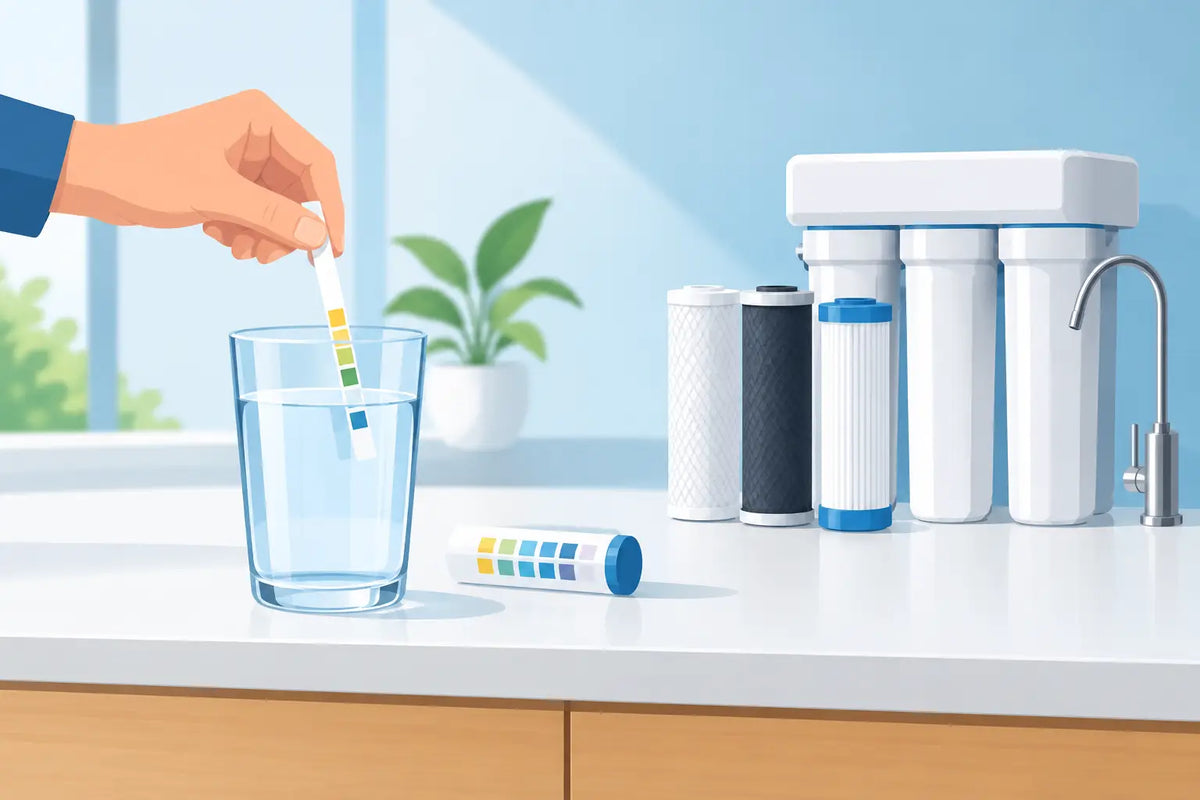
A chlorine smell at the kitchen sink, orange stains in the shower, scale on the coffee maker, or concern about PFAS can all make a water filter feel urgent. The right first move is to test water before buying filters. A filter is only as useful as the problem it is designed to address, and water that looks clear can still contain contaminants that affect health, taste, plumbing, or equipment.
For homeowners, a proper water test replaces guesswork with a clear treatment plan. For restaurants, rental properties, offices, and light commercial facilities, it also helps protect equipment, maintain consistent water quality, and avoid costly system changes after installation. Pure Water. Protected Family. It starts with knowing what is actually in the water.
Why Testing Comes Before Choosing a Filter
Not all water problems have the same cause. A bad taste may come from chlorine used by a municipal utility, while a rotten-egg odor often points to hydrogen sulfide or sulfur bacteria in well water. White scale can indicate hardness, but high total dissolved solids, iron, manganese, sediment, and acidity each require different treatment approaches.
Buying a system based on one symptom can lead to a disappointing result. A carbon filter may improve chlorine taste and odor, for example, but it is not the right standalone solution for hard water. A water softener can reduce scale caused by calcium and magnesium, but it does not remove PFAS, bacteria, or many dissolved contaminants. Reverse osmosis can provide highly purified drinking water at a point of use, yet it is not always the most practical answer for whole-home iron staining or sediment.
Testing also keeps you from overspending. Some homes need a simple under-sink drinking water filter. Others need a whole-house sediment and carbon system, a softener, a UV sterilizer, or a coordinated well water treatment setup. The goal is not to install the biggest system. It is to install the system that solves your water problem reliably.
When You Should Test Water Before Buying Filters
Testing is a smart starting point for any property, but it is especially valuable when your water source or conditions have changed. Well owners should test regularly because groundwater quality can shift with weather, flooding, nearby construction, agricultural activity, aging well components, or changes in the aquifer. Private wells are not monitored by a municipal water utility, so the owner is responsible for water quality.
Municipal water users can benefit from testing too. Utilities treat water to meet regulatory standards, but the water can pick up sediment, metals, or other issues as it travels through distribution lines and a building's plumbing. Older homes may have concerns related to lead service lines, lead solder, or aging fixtures. Chlorine or chloramine levels can affect taste, odor, skin comfort, and the performance of certain appliances.
Test promptly if you notice staining, cloudy water, a metallic taste, persistent odor, scale buildup, declining water pressure, or changes after a storm or plumbing repair. You should also test before installing a new whole-house system, replacing expensive equipment, purchasing a home with a private well, or specifying filtration for a commercial kitchen or facility.
What a Useful Water Test Should Measure
The best test depends on your source and the issue you are trying to solve. A basic screening can identify several common treatment needs, but a more detailed laboratory analysis may be appropriate for well water, suspected contamination, or commercial system design.
For many residential properties, start by evaluating hardness, iron, manganese, pH, alkalinity, total dissolved solids, turbidity or sediment, and chlorine or chloramine if you are on city water. These results help determine whether you need scale control, softening, iron filtration, neutralization, carbon filtration, or sediment reduction.
If health-related contaminants are a concern, request testing that matches the risk. This may include lead, arsenic, nitrate and nitrite, bacteria, PFAS, radon, or volatile organic compounds. The location matters. Nitrate testing is particularly relevant near agricultural areas or septic systems, while bacteria testing is essential for private wells and should be repeated after flooding or well service.
A quality test report should show the measured result, the unit of measurement, and any applicable benchmark or recommended level. That information allows a water treatment professional to size equipment correctly and select media that is rated for the target contaminant.
A note on at-home test strips
At-home strips can be useful for a quick look at hardness, pH, chlorine, and similar indicators. They can help you recognize a likely issue, but they are not a substitute for a certified laboratory test when making a major purchase or investigating a possible health concern. Results can be affected by sampling technique, storage, timing, and the limited sensitivity of the strip.
Use a lab test when the stakes are higher, such as a private well, lead concern, suspected PFAS exposure, bacteria risk, or a whole-home or commercial system investment. Think of test strips as a starting signal, not a complete diagnosis.
How to Collect a Water Sample That Gives You Answers
Water testing is only as accurate as the sample. Follow the laboratory's collection instructions exactly, especially for bacteria, lead, and PFAS testing. The sample container, sampling point, holding time, and shipping requirements can all matter.
For a general water quality test, collect from a cold-water tap that is not connected to a treatment device. Remove aerators or screens if the instructions call for it, and avoid sampling from a faucet that has a built-in filter. For lead testing, the lab may request a first-draw sample after water has been sitting in the plumbing for a specified period. For bacteria testing, use the sterile bottle provided and do not touch the inside of the cap or container.
If you have both untreated and treated water available, testing both can be helpful. It shows whether the existing system is still performing and whether replacement media, service, or a new treatment approach is needed.
Match the Test Result to the Right Treatment
Once you have results, system selection becomes much more straightforward. Sediment filters protect plumbing and downstream equipment from sand, silt, rust, and other particles. Activated carbon is commonly used to reduce chlorine, chloramine, unpleasant taste, and odor. A properly sized water softener addresses hardness and helps reduce scale on fixtures, water heaters, dishwashers, and glassware.
Iron, manganese, sulfur, and low pH often require more specialized whole-house treatment. These systems may use oxidation, air injection, specialty media, or neutralizing media, and their design depends on the exact concentration, flow rate, and water chemistry. A one-size-fits-all filter is rarely the best answer for well water.
For drinking water, reverse osmosis systems can reduce a broad range of dissolved contaminants, including many contaminants that standard carbon filters are not designed to handle. Certified PFAS filtration options may use activated carbon, reverse osmosis, or other technology depending on the product and the specific compounds involved. Always review the system's performance claims for the contaminants you need to address.
UV systems are a strong option when microbiological protection is needed, but UV does not remove particles, chemicals, or dissolved minerals. Water often needs pretreatment before UV so the light can work effectively. This is why treatment trains matter: each stage has a job, and each stage supports the next.
Size the System for the Property, Not Just the Water Report
A test result identifies what needs to be treated. Proper sizing determines whether the system can keep up. Whole-house equipment should be selected based on peak flow rate, household size, plumbing configuration, water usage patterns, and the concentration of the contaminants found. A system that is undersized may reduce pressure or allow breakthrough during high-demand periods.
For businesses, sizing requires an even closer look at daily demand, peak demand, incoming water quality, service schedules, and equipment requirements. A restaurant's ice machine, espresso equipment, dishwashing station, and drinking water dispenser may each have different water quality needs. Commercial reverse osmosis and filtration systems should be specified around the application, not selected from a generic capacity number.
Budget matters, but so do maintenance requirements. Cartridges, media, salt for conventional softeners, UV lamps, and periodic testing are part of owning a water treatment system. The best value is a system with predictable maintenance that consistently solves the documented problem.
Get Clear Guidance Before You Buy
Water treatment should feel manageable, not technical for the sake of being technical. Keep your test report, note your water source, identify the fixtures or appliances affected, and estimate how much water the property uses. Those details make it much easier to compare options and avoid buying a filter that addresses the wrong issue.
PureWaterGuys can help translate water test results into a practical recommendation for a home, business, or light industrial application. The right question is not, “What filter is best?” It is, “What does this water need?”
A water test gives you a confident place to start. Once you know what is in your water, you can choose treatment that protects the people, plumbing, and equipment that depend on it every day.