
October 22, 2026
How to Remove Well Water Iron From Your Home
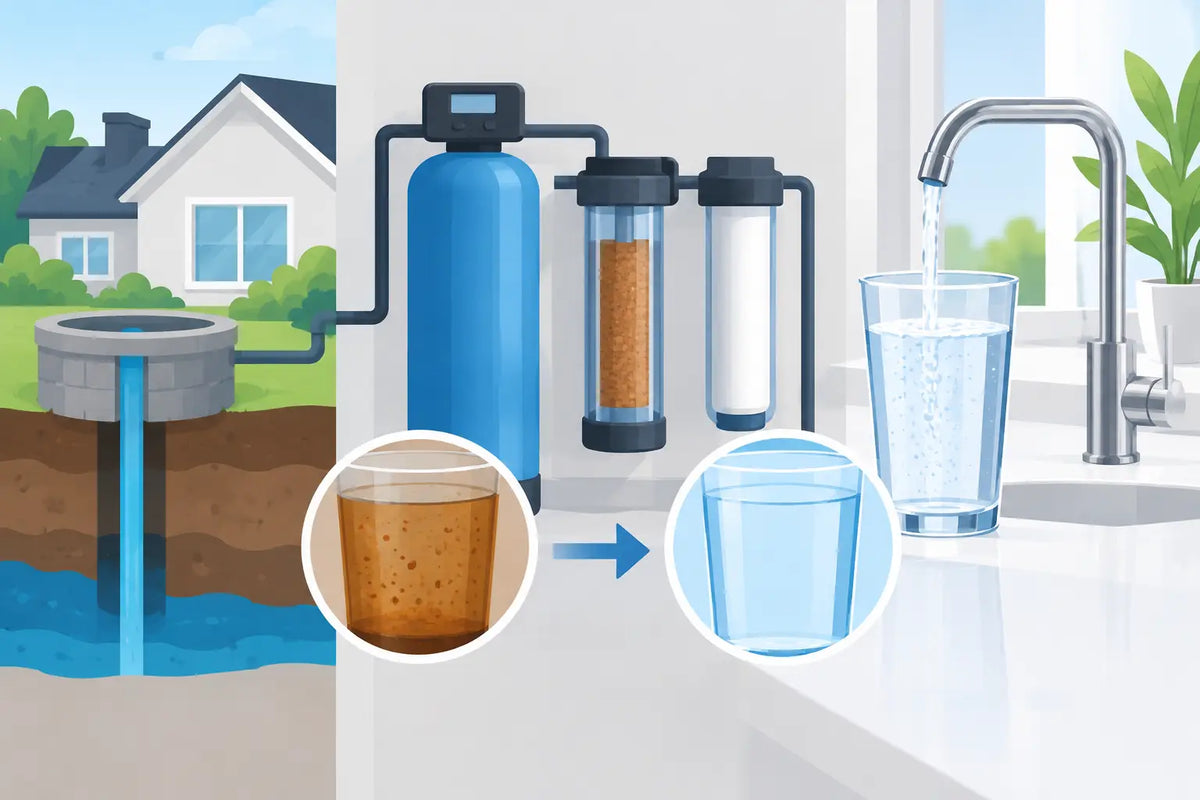
Orange stains around faucets, rust-colored laundry, a metallic taste, and sediment collecting in toilet tanks all point to the same common well-water problem: iron. To remove well water iron effectively, you need more than a filter that promises cleaner water. You need a system matched to the form of iron in your water, its concentration, your home's flow demand, and the conditions that affect treatment performance.
Iron is usually not a health concern at typical household levels, but it can create expensive and frustrating problems. It stains fixtures and dishes, clogs plumbing and appliances, shortens water heater life, and can feed iron bacteria that leave behind slime and odor. The right treatment restores clear water while helping protect the systems that keep your home running.
Why Well Water Iron Is Not a One-Size-Fits-All Problem
A lab water test is the starting point because “iron” can behave very differently from one well to the next. Clear-water iron, also called ferrous iron, is dissolved in water when it comes out of the well. It may look perfectly clear in a glass, then turn yellow, orange, or brown after exposure to air.
Red-water iron, or ferric iron, has already oxidized into visible particles. It often creates immediate discoloration and can sometimes be captured with sediment filtration. Iron bacteria are different again. They are organisms that use iron as part of their growth cycle, creating a slippery orange, brown, or black buildup inside toilets, tanks, pipes, and filters.
Your test should also measure pH, manganese, hardness, hydrogen sulfide, alkalinity, total dissolved solids, and bacterial indicators when appropriate. These results determine whether a simple oxidation filter, water softener, specialized iron filter, or a multi-stage system is the best fit. Selecting equipment based on a stain alone can lead to poor removal, frequent maintenance, and wasted money.
How to Remove Well Water Iron by Iron Type
Dissolved iron needs oxidation and filtration
For clear-water iron, the treatment process usually needs to convert dissolved iron into particles before it can be filtered out. Air injection and oxidation systems introduce oxygen into the water, causing iron to precipitate so a media bed can capture it. These systems are a strong choice for many private wells because they do not necessarily require chemical feed pumps or added chemicals.
Backwashing iron filters are commonly used for whole-home treatment. At scheduled intervals, the system reverses water flow to rinse accumulated iron and sediment out of the media bed. Proper backwash flow is critical. A filter that is undersized, paired with an inadequate drain, or installed where the well pump cannot provide enough flow may not clean itself fully.
Some water conditions require stronger oxidation. Chlorine, hydrogen peroxide, ozone, or other chemical treatment methods may be appropriate for higher iron levels, iron bacteria, sulfur odor, or difficult water chemistry. Chemical systems can be highly effective, but they add components that require monitoring, refill schedules, and correct feed settings.
Particulate iron may need staged filtration
When water already contains visible rust particles, a sediment prefilter may protect the main treatment system by catching larger debris first. This does not always solve the underlying iron issue on its own. Fine iron particles can pass through a cartridge quickly, and cartridges can clog fast when iron levels are high.
A staged whole-house design may use a sediment filter before an iron reduction tank. The first stage reduces loading, while the backwashing system provides the capacity needed for long-term use. For homes with intermittent turbidity after rain or changes in well pumping, this approach can provide more consistent performance.
Iron bacteria require a different response
Iron bacteria are often mistaken for ordinary iron staining. If you see stringy slime, oily-looking surface films, persistent clogged fixtures, or a musty odor, ask for an evaluation that considers bacterial growth. A shock chlorination treatment may help sanitize the well and plumbing, but it is not always a permanent answer. Bacteria can return if the well remains vulnerable to contamination or the underlying conditions remain favorable.
Continuous disinfection followed by filtration may be recommended in persistent cases. The exact approach depends on the well, local water conditions, and whether testing identifies other bacteria that need attention. This is a situation where professional guidance is especially valuable, because treatment must address both water quality and the condition of the well system.
When a Water Softener Can Help - and When It Cannot
A conventional ion-exchange water softener can remove small to moderate amounts of dissolved ferrous iron while also reducing hardness minerals. For a home with hard water and relatively low clear-water iron, this can be a practical combined solution. The trade-off is that iron can foul the softening resin over time, increasing salt use and requiring periodic resin cleaning.
A softener is generally not the first choice for high iron levels, red-water iron, iron bacteria, or water with significant manganese and sulfur odor. In those cases, an iron filter installed ahead of the softener is often the better design. It reduces iron loading before water reaches the softener, helping both systems work more reliably.
Salt-free conditioners do not remove dissolved iron. They may have a role in specific scale-control applications, but they should not be selected as an iron treatment solution.
Size the System for Your Household, Not Just Your Test Result
Iron concentration matters, but capacity and flow rate matter just as much. A small filter may look sufficient on paper yet create pressure loss when multiple showers, laundry, and kitchen use overlap. A system that cannot meet peak household demand can reduce water pressure and leave untreated water slipping through during heavy use.
For a typical home, system selection should account for the number of bathrooms, occupants, plumbing size, well pump output, pressure tank performance, and future needs. A larger home, guest suite, irrigation connection, or light commercial setting may require a higher-service-flow system or a custom configuration.
Backwashing equipment also needs a suitable drain connection and enough drain flow to dispose of rinse water. Before purchasing, confirm where the backwash water will go and whether local rules affect discharge. This basic planning step prevents surprises after delivery.
Do Not Skip Water Testing
At-home iron test kits can provide a useful first clue, especially when stains appear suddenly. However, a certified laboratory analysis gives the more complete information needed to specify a system confidently. Iron results can vary with sampling method and recent water use, so follow the lab's instructions carefully.
If your well water has a rotten-egg odor, black staining, unusual taste, recent flooding, or a sudden change in color, test promptly rather than assuming it is only iron. Hydrogen sulfide, manganese, sediment, acidity, and microbial contamination can affect both the treatment choice and the safety of your water.
For businesses, rental properties, restaurants, and light industrial facilities, testing should be paired with a review of peak demand, operating hours, equipment protection needs, and applicable water requirements. A residential-sized unit is rarely the right answer for a commercial water load.
Maintenance Keeps Iron Removal Working
Even a correctly selected system needs routine care. Replace prefilters when pressure drops or according to the recommended schedule. Check salt levels and use approved resin cleaner when a softener is handling low levels of iron. For backwashing filters, verify that the control valve cycles correctly and that the drain line remains clear.
Watch for returning stains, pressure loss, unusual water color, or a change in taste and odor. These can signal that media needs service, a prefilter is blocked, the well chemistry has changed, or the system settings need adjustment. Annual testing is a practical habit for most well owners, with more frequent checks after flooding, well repairs, or major changes in water appearance.
Choose Treatment With Confidence
The best way to remove well water iron is to treat the water you actually have, not the problem you assume you have. A properly sized whole-house iron system can protect plumbing, appliances, laundry, and everyday water quality for years, while the wrong system can become another maintenance problem in the utility room.
PureWaterGuys can help match your water test and household demand to a practical treatment path, from straightforward iron filtration to multi-stage well water systems. Start with a current water analysis, note your home's peak water use, and choose a system built to keep clean water flowing when your family needs it most.