
October 18, 2026
Iron Removal Filters for Clean, Stain-Free Water
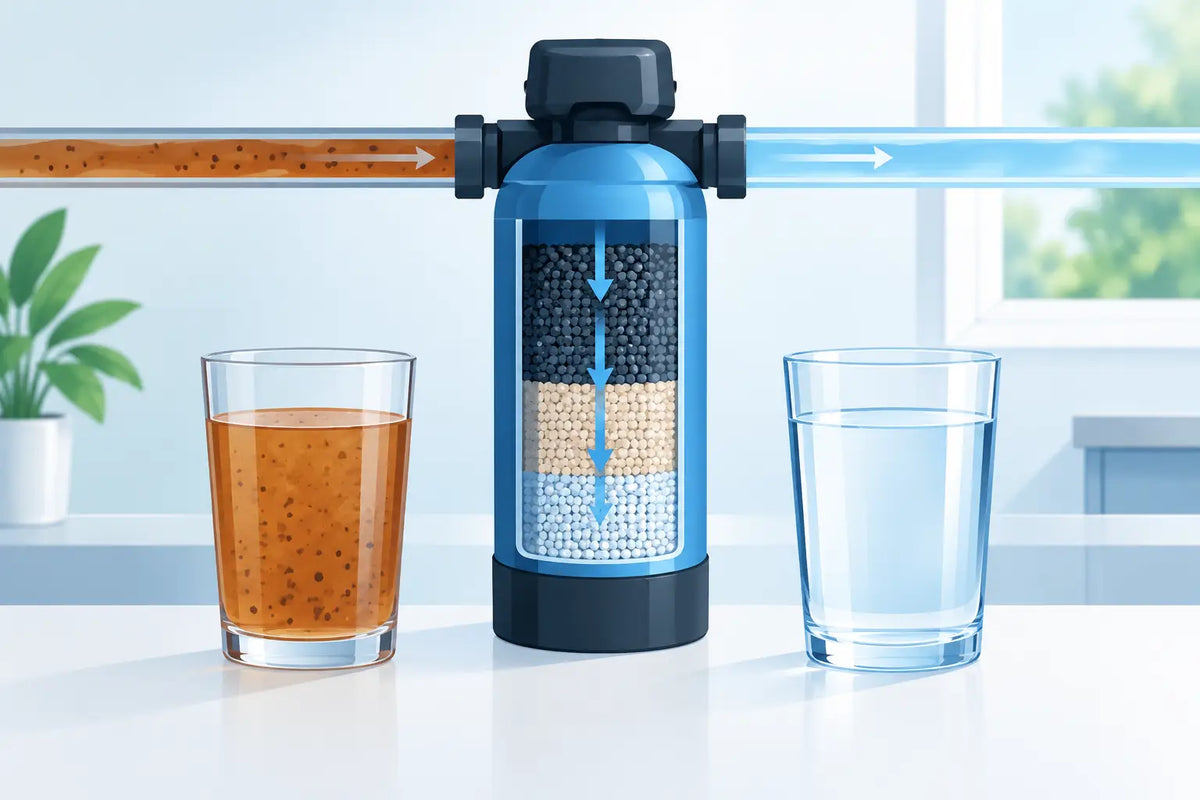
Orange streaks in sinks, rust-colored laundry, and a metallic taste at the kitchen tap are more than cosmetic frustrations. They are common signs of iron in water. The right iron removal filters can protect your plumbing, water heater, fixtures, and appliances while making everyday water more pleasant to use.
For most homes, this is a whole-house water treatment decision, not a small drinking-water filter decision. Iron enters the water before it reaches every faucet, shower, toilet, and appliance. A properly selected system treats the problem at the point where water enters the home, giving your family cleaner water throughout the property.
What Iron in Water Can Do to Your Home
Iron is naturally present in many private wells and can also occur in some municipal water supplies. It is not usually a primary health concern at the levels that cause household complaints, but it can create expensive and persistent maintenance problems.
When dissolved iron reaches air, it oxidizes and forms the familiar orange-brown particles that stain porcelain, tile, clothing, and fixtures. Iron can also settle inside pipes, pressure tanks, water heaters, dishwasher components, and washing machines. Over time, that buildup may restrict flow, reduce appliance efficiency, and increase cleaning and repair costs.
The first clue is not always visible staining. Clear water that develops a yellow, orange, or brown tint after sitting in a glass often contains dissolved ferrous iron. Water that comes out rusty from the start may contain oxidized ferric iron, sediment, or a combination of issues. A metallic taste, musty odor, or slimy orange residue can point to related contaminants that affect the system you need.
Iron Removal Filters Work Best When Matched to Your Water
There is no single iron filter that fits every home. Effective treatment depends on the form and concentration of iron, water pH, household flow rate, and whether manganese, sulfur odor, hardness, or iron bacteria are also present.
Dissolved Iron Needs Oxidation and Filtration
Ferrous iron is dissolved in water and may be invisible when it first leaves the faucet. Many iron removal systems handle it by introducing oxygen or another oxidizing process, which changes dissolved iron into particles that a specialized media bed can trap. Air injection systems are a common option for well water because they can oxidize iron without continuously adding chemicals.
Media-based systems may use manganese dioxide or other catalytic media to support oxidation and filtration. Depending on the media and water conditions, a system may need periodic backwashing, air draw, regeneration, or an oxidant feed. The right choice comes down to the water test, not the color of a stain alone.
Particulate Iron May Need Sediment Protection
Ferric iron is already oxidized into visible particles. A sediment prefilter may help capture larger material before water reaches the primary treatment tank. However, a cartridge alone is rarely a complete solution for ongoing well-water iron problems. It can clog quickly, reduce water pressure, and create frequent replacement costs if it is asked to do the work of a properly sized whole-house filter.
Iron, Manganese, and Sulfur Often Travel Together
Manganese can leave black or dark brown staining and may require more demanding treatment conditions than iron. Hydrogen sulfide creates a rotten-egg odor and can make water unpleasant even when staining is limited. Some whole-house iron removal systems can address iron, manganese, and sulfur together, but performance depends heavily on concentrations and pH.
Iron bacteria are another concern. These organisms can produce orange, brown, or greasy slime in toilet tanks and plumbing fixtures. Standard filtration may reduce the visible effects, but bacteria-related problems often require well sanitation and a treatment strategy designed around the source of contamination. A water test and, when needed, a well inspection provide a better path than guessing.
Start With a Complete Water Test
Before choosing an iron removal filter, test the water at the point where it enters the home or directly from the well source. At a minimum, identify total iron, manganese, pH, hardness, and hydrogen sulfide. Testing for turbidity, total dissolved solids, bacteria, and other local concerns can also prevent an incomplete system recommendation.
The numbers matter. A low iron level in neutral-pH water may be managed with a different media and tank size than high iron in acidic water. Low pH can interfere with oxidation and shorten media life. High hardness can complicate treatment, while high iron loads may call for more backwash capacity, a larger tank, or staged equipment.
Share practical details along with the results. The number of bathrooms, occupants, peak water use, well pump capacity, pressure tank setup, and plumbing size all affect system sizing. A filter that is too small may look attractive on paper but fail when several showers, appliances, and fixtures run at once.
Choosing Between an Iron Filter and a Water Softener
A water softener can remove limited amounts of dissolved iron in some situations while also reducing calcium and magnesium hardness. That can be useful for homes with mild iron and significant hard-water scale. But softeners are not the best standalone answer for every iron problem.
Higher iron concentrations can foul softener resin, increase salt use, and create frequent maintenance needs. Ferric iron, iron bacteria, manganese, and sulfur odor often require dedicated pretreatment before a softener. In many well-water applications, the most dependable sequence is an iron removal system first, followed by a softener if hardness remains a concern.
Salt-free conditioners can help with certain scale-related concerns, but they do not remove iron. Reverse osmosis systems improve drinking water at a dedicated faucet, yet they are also not a substitute for whole-home iron treatment. Treat the source problem first, then add point-of-use filtration where it delivers an additional benefit.
Sizing Iron Removal Filters for Real Household Demand
A whole-house system has to do two jobs: remove contaminants and maintain usable water flow. A system sized only around iron concentration may struggle if it cannot support the home's peak gallons-per-minute demand.
Backwashing is equally important. Most media tanks need a strong enough water flow to lift and rinse the media bed during cleaning cycles. If the well pump or plumbing cannot provide the necessary backwash rate, the media may not clean properly and performance can decline. This is a common reason a system that seems correctly specified still disappoints after installation.
For larger homes, multi-bathroom properties, shared wells, restaurants, and light commercial facilities, equipment may need larger tanks, multiple tanks, retention time, chemical feed, or a custom control strategy. Commercial water treatment should be specified around actual demand, incoming water quality, operating hours, and service requirements. Built-to-scale equipment protects both water quality and operational continuity.
What Maintenance Should You Expect?
Most automatic iron filters are designed to clean themselves through scheduled backwash cycles. The system sends water to drain to flush trapped iron and restore the media bed. Homeowners should still check the drain line, monitor water pressure, and watch for returning stains or odor.
Maintenance varies by system. Air injection units may require periodic inspection of valves and air components. Chemical oxidation systems need solution replenishment and feed-pump checks. Sediment prefilters require cartridge changes, especially after storms, well work, or seasonal shifts in water quality. Filter media does not necessarily need annual replacement, but it does have a service life that depends on water chemistry and usage.
A good installation also includes a bypass valve and accessible connections for service. If your water comes from a private well, retesting periodically is smart. Well water can change after heavy rain, drought, pump replacement, nearby construction, or changes in the aquifer.
Get a System Recommendation Based on Evidence
Iron problems are frustrating because the symptoms are easy to see but the cause can be more complex. Buying the first filter labeled for iron may reduce staining temporarily without resolving the conditions behind it. A matched whole-house system can provide better performance, lower maintenance, and stronger protection for the equipment you rely on every day.
At Pure Water Guys, water treatment guidance starts with the actual problem: your test results, household demand, plumbing setup, and treatment goals. Bring those details to the conversation, and you can choose with confidence instead of continuing to scrub away the evidence.