
October 28, 2026
Home Water Testing Guide for Safer Water
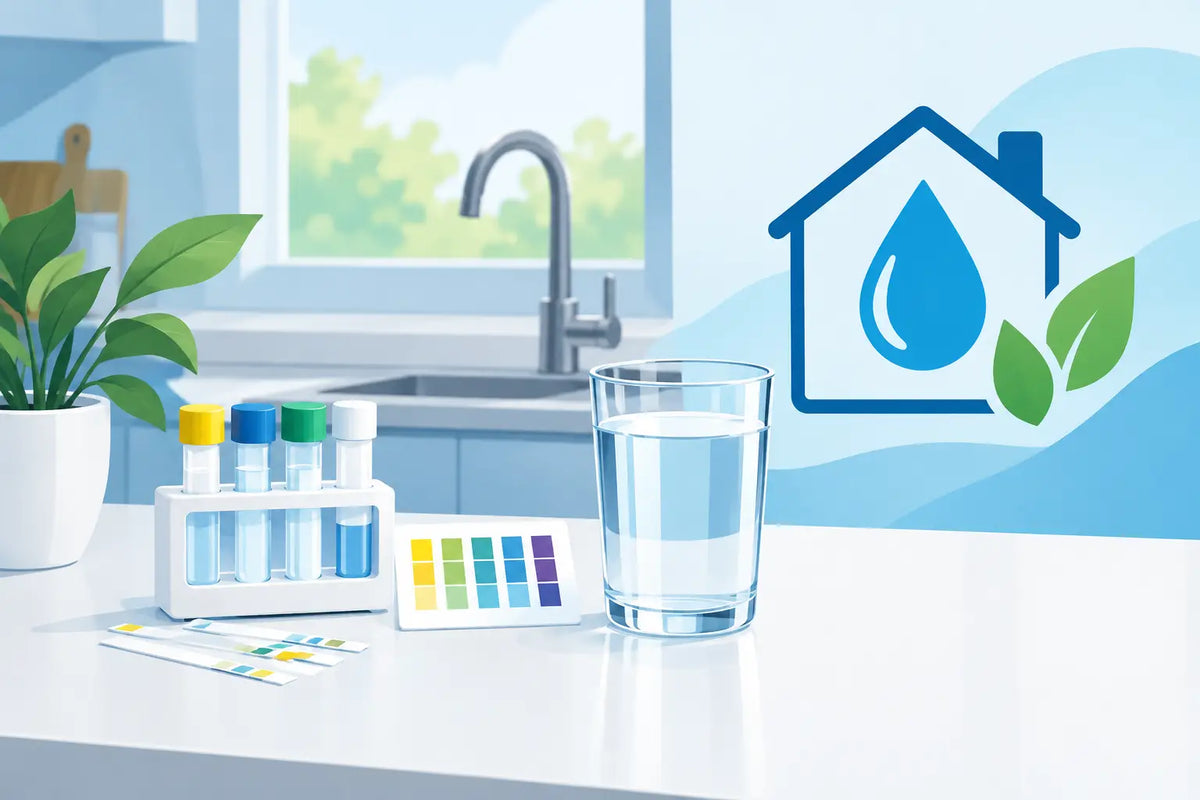
A glass of water can look perfectly clear and still carry minerals, metals, chemicals, or microorganisms you would rather not bring into your home. This home water testing guide helps you move past guesswork, identify the issue behind your water concerns, and choose treatment based on real results rather than a one-size-fits-all claim.
Whether your water comes from a municipal supply or a private well, testing is the first practical step toward better-tasting water, appliance protection, and confidence at every tap.
When Should You Test Your Water?
Test when something changes. A new metallic taste, chlorine odor, rotten-egg smell, white scale on fixtures, orange staining, or recurring skin irritation can all point to a water-quality concern. If you rely on a private well, annual testing is a smart baseline even when the water appears normal.
Homeowners on city water should also consider testing after a plumbing repair, a change in water taste or odor, local construction, flooding, or a public notice about water quality. Municipal water is treated, but water can still pick up contaminants from aging pipes, household plumbing, or local conditions before it reaches your glass.
For a new home, test before selecting a whole-house filtration system, water softener, or reverse osmosis system. The right equipment depends on what is actually in the water and how much water your household uses.
Home Water Testing Guide: Start With the Right Test
The best testing method depends on the question you need answered. At-home strips and basic kits are useful for a quick screening of common issues such as hardness, pH, chlorine, iron, and nitrate. They can reveal whether a problem is likely present, but they do not always provide the precision needed to size a treatment system or confirm a health-related contaminant.
A certified laboratory test provides more reliable detail. It is the better choice for private wells, suspected contamination, PFAS concerns, lead concerns, bacteria, or any situation where you are making a significant investment in water treatment. Laboratory reports typically show measured concentrations, which makes it easier to compare results with applicable drinking-water standards and select the appropriate filtration technology.
Many homeowners benefit from using both approaches: an initial at-home screening for fast direction, followed by laboratory testing when results are unusual, symptoms persist, or the concern involves health and safety.
What to Test for City Water
Municipal water is generally disinfected before delivery, so common concerns often involve chlorine or chloramine taste, hardness, lead from household plumbing, sediment, and emerging contaminants such as PFAS. A useful city-water panel may include hardness, pH, total dissolved solids, chlorine or chloramine, lead, copper, iron, manganese, and PFAS when relevant to your area or household concerns.
If the issue is mostly taste and odor, chlorine and sediment may be the main targets. If you have scale on faucets, cloudy dishes, dry skin, or shortened appliance life, hardness testing should move to the top of the list.
What to Test for Well Water
Well water is not regulated in the same way as municipal water, so the homeowner is responsible for monitoring quality. A comprehensive well-water test should generally assess bacteria, nitrate and nitrite, pH, hardness, iron, manganese, total dissolved solids, and sulfur-related concerns where odor is present.
Depending on your location and property history, you may also need to test for arsenic, uranium, radon, pesticides, volatile organic compounds, or other regional contaminants. Flooding, nearby agriculture, septic systems, and changes in land use are all reasons to expand testing.
Collect a Sample That Produces Useful Results
A good test starts with a good sample. Follow the test kit or laboratory instructions exactly, especially for bacteria, lead, and PFAS testing. The wrong bottle, improper timing, or touching the inside of a collection container can affect the result.
For general water-quality testing, collect from a cold-water tap that is used regularly and does not have a filter attached. Remove the aerator if the instructions call for it, then allow the water to run for the specified amount of time. For lead testing, the instructions may require a first-draw sample after the water has sat unused for several hours, because the goal is to evaluate water that has been in contact with plumbing.
Do not collect a sample from the hot-water side unless the test specifically requests it. Hot water can dissolve more metals from plumbing and may not represent the water you normally drink.
How to Read Common Water Test Results
Numbers on a report can feel technical, but they become manageable when you connect each result to a household problem and treatment goal. Some findings are primarily about appearance, taste, and plumbing. Others require faster action because they can affect health.
Hardness is usually reported as grains per gallon or milligrams per liter. Hard water is not typically a drinking-water safety issue, but it forms scale in water heaters, dishwashers, coffee makers, and pipes. A water softener is often the most effective choice when hardness is high, while a salt-free conditioner may help reduce scale in certain applications without removing hardness minerals.
Iron and manganese can create orange, brown, or black staining and may leave water with a metallic taste. Treatment may involve oxidation and filtration, specialized media, or a well-water system designed around the measured levels and water chemistry.
Low pH can make water corrosive, increasing the chance of metal leaching from plumbing. High pH can contribute to scale and affect how other treatment equipment performs. pH adjustment is often part of a larger treatment plan, not a standalone answer.
Chlorine and chloramine are disinfectants used by many utilities. They are commonly responsible for swimming-pool taste, odor, and dry-feeling skin. Activated carbon filtration can improve taste and odor, though chloramine may require specific carbon media and sufficient contact time.
Lead deserves special attention because it often comes from plumbing rather than the water source. If lead is detected, use a drinking-water treatment system certified for lead reduction and address the plumbing source when possible. Families with young children or pregnant household members should treat a lead result with added urgency.
Bacteria results, including total coliform or E. coli, should never be ignored. They can indicate a pathway for contamination into a well or plumbing system. Disinfection, well inspection, and follow-up testing may be needed. A UV sterilizer can provide ongoing microbial protection when the water has been properly prefiltered and the system is correctly sized.
PFAS results require a targeted approach. These persistent chemicals are not reliably addressed by every general-purpose filter. Reverse osmosis systems and certain specialized PFAS filtration solutions are commonly used for point-of-use drinking water, while whole-home approaches depend on the contaminant level, water use, and treatment objective.
Match the Treatment to the Problem
The most expensive system is not automatically the best system. A whole-house carbon filter can be an excellent fit for chlorine taste, sediment, and broad water-quality improvement, but it will not replace a softener for serious hardness or a properly designed iron system for high iron well water.
For drinking and cooking water, reverse osmosis offers broad reduction of many dissolved contaminants and is often installed under the sink. It is especially useful when a household wants focused protection at the tap without treating every gallon used for laundry and bathing. It does produce wastewater during filtration and needs periodic filter changes, so the fit depends on your priorities.
Whole-house systems treat water at the point where it enters the home. They make sense when the problem affects showers, fixtures, appliances, laundry, or every faucet. Sediment filters, carbon filtration, water softeners, iron filters, sulfur systems, and UV sterilizers are often combined for well water because one stage rarely solves every issue.
If results show more than one concern, system order matters. Sediment removal may need to happen before carbon, UV, or reverse osmosis. Hardness or iron may need treatment before equipment that could otherwise foul prematurely. This is where expert system specification can save you from buying equipment that looks right but performs poorly in your water.
Retest After Installation and Maintain the System
Testing should not end once a system is installed. Retest after the system has been operating long enough to confirm performance, particularly for lead, PFAS, bacteria, nitrate, or any issue that drove the purchase. Keep the report with your filter-change records and note the installation date.
Every treatment system has maintenance requirements. Cartridges need replacement, softeners need salt or service depending on the model, UV lamps need scheduled replacement, and media tanks eventually reach the end of their service life. Skipping maintenance can reduce performance and create a false sense of security.
If your report raises questions, do not force a generic filter to solve a specific problem. Pure Water Guys can help match your water results, household needs, and budget to a system built for the job. Clean water should not be a mystery at the kitchen sink. It should be a decision you can make with clear information and the right support.