
September 04, 2026
Can Filters Remove Lead From Drinking Water?
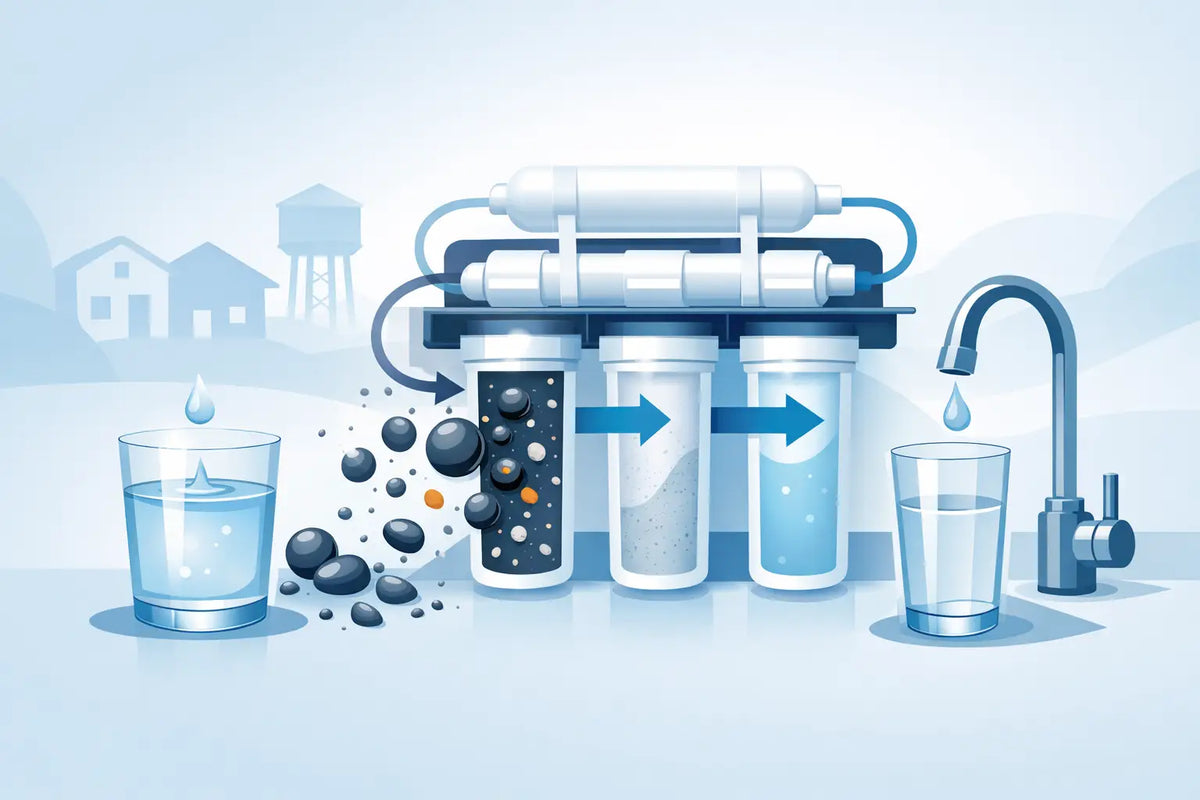
A clear glass of water can still carry a problem you cannot see, smell, or taste. Can filters remove lead from drinking water? Yes, but only when the filter is specifically designed, tested, and certified for lead reduction. A basic sediment filter, standard refrigerator filter, or carbon filter that improves taste is not automatically a lead filter.
For families, property owners, and facility managers, the right question is not simply whether to buy a filter. It is which system protects the water people actually drink, cook with, and use for baby formula. Lead requires a targeted solution, careful installation, and ongoing cartridge replacement.
Can Filters Remove Lead Reliably?
Certified point-of-use filters can substantially reduce lead in drinking water when they are used according to their rated conditions. Look for a product that specifically lists lead reduction in its performance claims, typically through NSF/ANSI Standard 53 certification. Reverse osmosis systems may also address lead, with many models certified under NSF/ANSI Standard 58 for contaminant reduction.
Those certification details matter. A filter may contain activated carbon and still be intended only for chlorine, odor, or better-tasting water. Lead reduction generally requires specialized filter media, ion exchange media, a membrane, or a combination of treatment technologies. Never assume a filter handles lead based on its appearance, price, or general “purified water” language.
The product documentation should identify the contaminant reduction claim, the filter's rated capacity, required flow rate, and any installation limitations. Certification applies to a specific system or replacement cartridge, not to every product sold under a brand name.
Why Lead Gets Into Tap Water
Lead is usually not present in the water as it leaves a treatment plant. More often, it enters as water moves through older plumbing, lead service lines, lead-containing solder, brass fixtures, or building components. Homes built before 1986 are more likely to have plumbing materials that can contribute lead, but newer buildings are not automatically free of risk. Fixtures and plumbing conditions vary.
Water chemistry also affects how much lead can dissolve or break loose from plumbing. Changes in water source, corrosion control, construction work, or a disruption to a service line can change results over time. That is why a home can have acceptable-looking water and still need testing.
Lead exposure is especially concerning for infants, children, and pregnant people. The practical goal is to reduce exposure at the taps used for drinking and food preparation, rather than relying on taste or appearance as a safety check.
The Best Filter Types for Lead Reduction
For most homes, a certified under-sink filter, countertop system, faucet-mounted filter, or refrigerator filter can protect one drinking-water location. This approach is often the most efficient choice when the concern is lead at the kitchen sink. It treats the water where it is consumed without adding a full-house system that may be unnecessary for the problem.
Under-Sink Lead Filters
An under-sink system provides filtered water through a dedicated faucet or, in some configurations, the existing kitchen faucet. It is a strong fit for homeowners who want higher capacity, a cleaner countertop, and dependable access to filtered drinking water for daily cooking and refilling bottles.
Choose a model with a verified lead claim and a capacity that matches household use. A small cartridge may be appropriate for a single resident, while a busy family should consider replacement frequency and gallons rated before making a selection.
Reverse Osmosis Drinking Water Systems
Reverse osmosis, or RO, uses a semipermeable membrane to reduce a broad range of dissolved contaminants. A properly specified RO system can be an excellent choice when lead is one concern among several, such as arsenic, certain PFAS compounds, nitrates, dissolved solids, or challenging taste.
The trade-off is that RO systems are more involved than a simple cartridge filter. They require installation space, periodic membrane and prefilter maintenance, and produce a portion of reject water during treatment. For many households, that added complexity is worthwhile because it delivers comprehensive drinking-water treatment at a dedicated tap.
Whole-House Filtration Systems
A whole-house filter treats water as it enters the building, which is valuable for sediment, chlorine, odor, iron, sulfur, or other property-wide concerns. But a whole-house carbon or sediment system should not be assumed to reduce lead. Lead claims must be explicitly stated and supported by the system's certification and operating specifications.
There is another consideration: if lead is picked up from plumbing inside the home, treating water before it enters the plumbing may not fully address exposure at the faucet. In that situation, a whole-house solution may be paired with a certified point-of-use drinking-water system at the kitchen sink. This layered approach addresses both broad water-quality needs and the final drinking-water tap.
What to Check Before You Buy
Start with a water test or information from your local water utility, but do not treat a utility report as a complete test of your home's plumbing. Utility reports describe water delivered to an area. A sample taken from your kitchen tap is more useful for identifying whether lead may be entering within your service line or indoor plumbing.
When comparing filters, confirm that lead reduction is clearly listed. Then check whether the system is certified for the intended use, whether replacement filters are readily available, and whether its capacity suits your household. A filter that removes lead only for a limited number of gallons must be replaced on schedule. Running a cartridge long past its rated life can reduce performance and water flow.
Installation matters, too. A filter must be connected to the correct water line, seals must be secure, and the unit must be flushed as instructed before use. Businesses should also consider peak demand, number of drinking stations, local plumbing requirements, and service access. A system that is undersized for a restaurant, office, or multi-unit property may not provide the flow or maintenance interval the site needs.
Filter Use Habits That Make a Difference
Even the right filter works best alongside sensible water-use habits. Use only cold tap water for drinking, cooking, and preparing infant formula. Hot water can dissolve lead from plumbing more readily, and most drinking-water filters are designed for cold water only. If hot water is needed, filter cold water first and then heat it.
After water has been sitting in pipes for hours, letting the cold water run briefly can help bring in fresher water. The amount of flushing needed depends on the plumbing layout and local guidance. If a lead service line is known or suspected, follow recommendations from the water utility or health department.
Do not try to solve lead with boiling. Boiling kills certain microorganisms but does not remove lead. Because some water evaporates during boiling, it can leave the lead behind in a smaller volume of water.
Keep a simple replacement schedule. Write the installation date on the cartridge, save the next replacement date in a phone calendar, and use genuine compatible replacements. If a filter has a filter-life indicator, treat it as a useful reminder, not a reason to ignore the manufacturer's gallon rating or maintenance instructions.
When Testing and Expert Guidance Matter Most
Testing is particularly worthwhile if your home has older plumbing, you are renovating, a service line was recently replaced, water has changed in taste or color, or a child or pregnant person lives in the home. Testing also gives you a baseline for selecting treatment and checking whether your approach is working.
For commercial properties, lead treatment should be specified around the actual application. A break room coffee station, school drinking fountain, restaurant kitchen, and laboratory each have different flow, use, and maintenance demands. The right solution may be a certified point-of-use system at key taps, multiple systems across the facility, or a larger treatment design with scheduled service.
Pure Water Guys can help match a lead-reduction solution to your water quality, household demand, plumbing setup, and budget. The goal is straightforward: give the people relying on your water a system chosen for the contaminant at hand, not a guess based on a label.
Lead protection is not about buying the most complicated filter. It is about choosing a certified system for the taps that matter, maintaining it on time, and using real water information to make a confident decision.