
September 28, 2026
Activated Carbon Filtration Buyer Guide for Homes
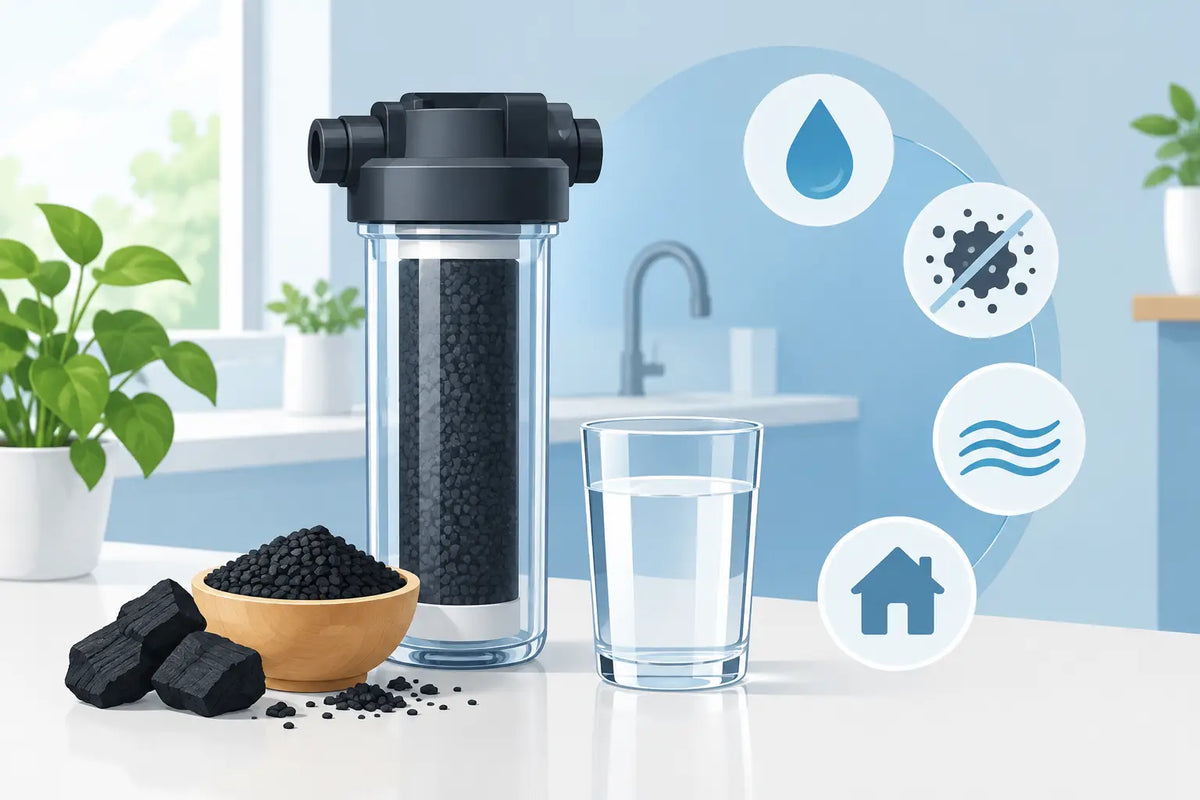
A chlorine smell at the kitchen sink, dry skin after a shower, and water that tastes flat are often signs that activated carbon filtration may help. But carbon is not a single solution for every water problem. The right system depends on what is in your water, where you want treatment, and how much water your household or facility uses. This activated carbon filtration buyer guide will help you choose with confidence.
What Activated Carbon Filtration Does Best
Activated carbon is a highly porous material, commonly made from coconut shell, coal, or wood. Its enormous internal surface area attracts and holds many dissolved contaminants through a process called adsorption. In practical terms, it is one of the most effective and widely used filtration methods for improving water's taste, odor, and overall drinking experience.
Carbon filtration is especially useful for reducing chlorine, many chlorine byproducts, volatile organic compounds, unpleasant tastes, and musty or chemical odors. It can also help reduce certain pesticides, herbicides, industrial compounds, and some PFAS compounds when the filter is specifically tested and rated for those contaminants.
That last detail matters. A carbon filter should never be assumed to remove every contaminant. Standard carbon media does not reliably remove hardness minerals, total dissolved solids, bacteria, viruses, or many dissolved metals. For those concerns, carbon may be one step in a larger treatment plan that includes a water softener, reverse osmosis system, UV sterilizer, iron filter, or specialized media.
Start With the Water Problem, Not the Filter
The best purchase begins with a clear diagnosis. If your city water smells like a pool or has a chemical taste, chlorine or chloramine reduction is usually the priority. If your well water smells like rotten eggs, hydrogen sulfide, iron, manganese, or bacteria may be involved, and carbon alone may not be enough.
A current water test gives you the strongest basis for system selection. Municipal water customers can also review their local water quality report, but a household test is still valuable because water can change as it travels through aging pipes and plumbing fixtures.
Consider the source and the concern together. A countertop or under-sink carbon filter may be enough for drinking and cooking water. A whole-house system is often the better fit when chlorine affects showers, laundry, appliance life, and every faucet. Businesses should also evaluate peak demand, fixture count, daily water use, and the consequences of reduced flow during busy periods.
Chlorine and chloramine are not the same
Many municipal supplies use chlorine, which standard granular activated carbon can reduce effectively with proper contact time. Chloramine is a more stable disinfectant made from chlorine and ammonia. It typically requires catalytic carbon or specially formulated carbon media for meaningful reduction.
If you do not know which disinfectant your utility uses, ask before you buy. Installing standard carbon for a chloramine problem can lead to disappointing results and unnecessary replacement costs.
Choose the Right Carbon Media
Carbon type affects performance, service life, and price. The most common options are granular activated carbon, carbon block, catalytic carbon, and specialty carbon blends.
Granular activated carbon, often called GAC, uses loose carbon granules inside a tank or cartridge. It is a practical choice for whole-house systems because it supports higher flow rates with relatively low pressure drop. Quality GAC is highly effective for chlorine, taste, and odor reduction, especially when the system provides enough media volume and contact time.
Carbon block filters compress fine carbon powder into a dense block. Their tighter structure can capture smaller particles while reducing many taste- and odor-causing compounds. They are common in under-sink drinking water systems and replacement cartridges. The trade-off is flow rate: a dense block can restrict water more than GAC, particularly as it approaches the end of its service life.
Catalytic carbon is engineered to improve reduction of chloramine and hydrogen sulfide. It is often the better investment for homes served by chloraminated municipal water or for certain odor issues. It costs more than standard carbon, but choosing the correct media can prevent an undersized or ineffective installation.
Specialty blends may combine carbon with KDF media, sediment filtration, scale-control media, or other treatment components. These can be useful when water has multiple concerns, but the product specifications should explain what each stage is designed to address. More stages do not automatically mean better treatment.
Size the System for Flow Rate and Contact Time
A filter that is too small may improve water briefly, then allow chlorine taste or odor to return before the stated replacement interval. Proper sizing is about more than gallons. It is also about how long water stays in contact with the carbon.
For whole-house systems, look at the home's peak flow demand. A larger household with multiple bathrooms, a high-flow shower, irrigation, or a soaking tub needs more capacity than a one-bathroom home. When water moves too quickly through a small carbon tank, the media has less opportunity to adsorb contaminants.
Tank-based whole-house carbon systems generally offer better flow and longer service life than small point-of-entry cartridges. They are a strong fit for homeowners who want chlorine reduction at every fixture. Cartridge systems can still be a smart choice for smaller homes, apartments, targeted applications, or locations where space and installation simplicity matter most.
For drinking water, assess gallons per day and desired flow at the faucet. An under-sink carbon block system provides convenient treatment at the point of use, while reverse osmosis with carbon prefiltration offers broader reduction for homes concerned about dissolved contaminants such as lead, nitrate, or PFAS. The right choice depends on your test results and goals.
Check the Performance Claims That Matter
Marketing language such as “premium carbon” or “advanced filtration” is not enough. Review the system's rated contaminant reductions, capacity, micron rating where applicable, operating flow rate, and recommended replacement schedule.
Third-party certification can add valuable confidence. NSF/ANSI 42 commonly addresses aesthetic effects such as chlorine taste and odor. NSF/ANSI 53 covers reduction claims for certain health-related contaminants, while NSF/ANSI 58 applies to reverse osmosis systems. Certification is tied to specific claims, so read the product documentation rather than assuming one certification covers every possible concern.
For PFAS, look for a specific stated reduction claim and follow the manufacturer's capacity guidance closely. Carbon can be effective for some PFAS compounds, but performance varies by the compound, carbon type, water chemistry, and how long the media has been in service. Families concerned about PFAS should avoid treating a broad “carbon filter” claim as a complete answer without verifying the system's testing and ratings.
Plan for Maintenance Before You Buy
Carbon needs replacement. Once its adsorption sites are used up, it no longer provides the same reduction performance. In some cases, an exhausted carbon filter can contribute to taste issues or become a place where bacteria may grow if it is neglected.
Replacement frequency varies widely. A small refrigerator or pitcher filter may need replacement every few months. Under-sink cartridges may last six months to a year, depending on usage and water quality. Whole-house carbon tanks can last years when properly sized, though sediment prefiltration and local water conditions strongly affect real-world service life.
Use a sediment prefilter when incoming water carries sand, rust, silt, or pipe debris. Sediment can clog carbon media, reduce flow, and shorten the useful life of the system. For well water, address iron, sulfur, manganese, or microbiological issues upstream when necessary. Carbon works best when it is protecting against the contaminants it was selected to handle.
Avoid These Common Buying Mistakes
The most expensive mistake is buying for a symptom without confirming the cause. A sulfur odor may require oxidation and filtration, not simply a carbon cartridge. Hard water calls for softening or scale control. High bacteria risk may call for UV treatment after appropriate prefiltration.
Another mistake is selecting a system based only on the lowest upfront price. An undersized filter can mean low flow, frequent cartridge changes, and inconsistent performance. Compare the expected cost of replacement media, installation needs, and the amount of treated water you need over time.
Finally, do not overlook installation requirements. Whole-house filtration is typically installed at the main water line and may require bypass valves, drain access for some configurations, and space for service. Point-of-use systems are less involved but still need adequate cabinet clearance and a realistic plan for cartridge replacement.
Get a System Matched to Your Water
A properly selected activated carbon system can make everyday water more enjoyable while helping reduce the contaminants that concern your household or customers. PureWaterGuys can help match filtration capacity, carbon media, and complementary treatment technologies to your water source, property size, and performance goals.
Start with the problem you can identify, then confirm it with water data. That approach turns filtration from a guess into a practical layer of protection for the water your family, tenants, guests, or employees use every day.