
June 13, 2026
UV Water Sterilizer for Well Water: What to Know
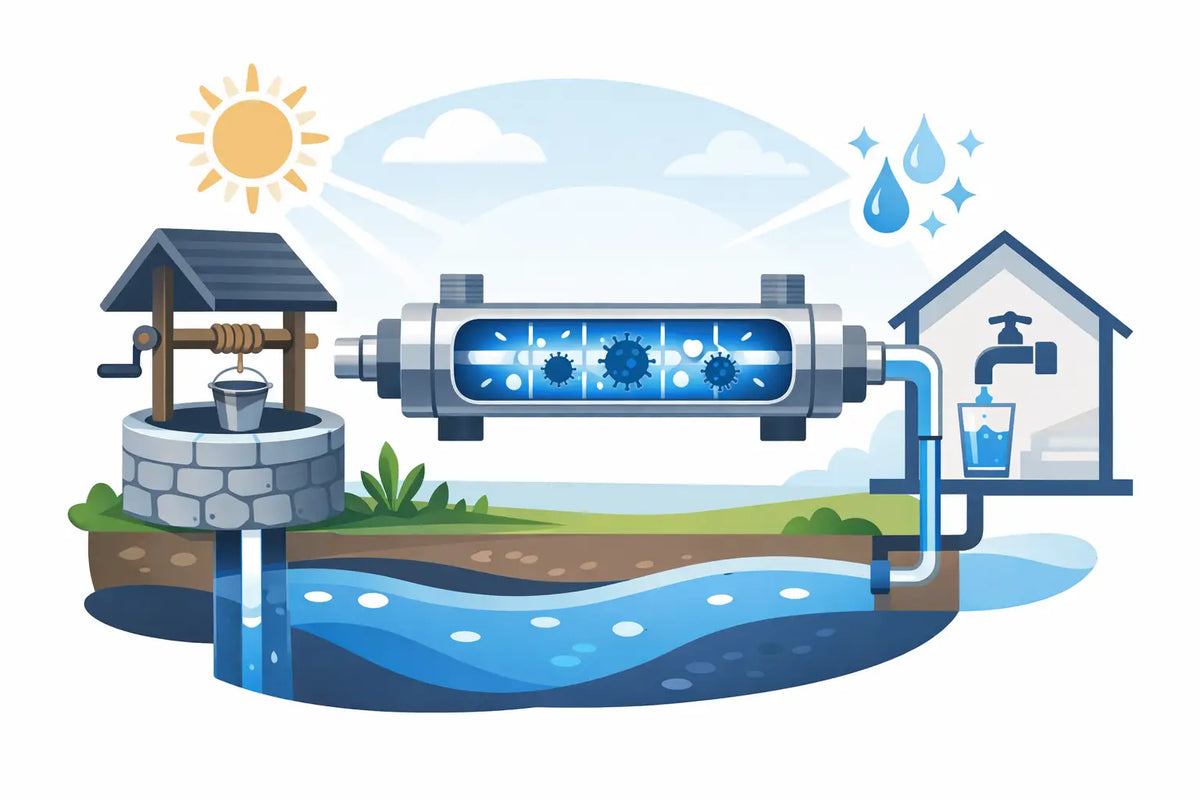
If your well water looks clear and tastes fine, that does not automatically mean it is microbiologically safe. Private wells can carry bacteria, viruses, and other microorganisms without obvious warning signs, especially after heavy rain, flooding, repairs, or changes in groundwater conditions. That is why many homeowners start looking at a uv water sterilizer for well water - not as a luxury add-on, but as a practical layer of protection for the water their family uses every day.
For the right application, UV is one of the most effective and low-maintenance ways to disinfect well water at the point where it enters the home. But it is not a cure-all. If the system is undersized, installed in the wrong order, or asked to treat water with poor clarity, performance can fall short. Choosing well means understanding both what UV does very well and what it does not do at all.
How a UV water sterilizer for well water works
A UV system exposes water to ultraviolet light, typically UV-C, inside a stainless chamber. As water flows past the lamp, that light disrupts the DNA of bacteria, viruses, and cysts so they cannot reproduce and infect. In simple terms, the organisms are not removed from the water, but they are inactivated.
That distinction matters. A UV water sterilizer for well water is designed for disinfection, not filtration. It does not remove sand, sediment, iron, manganese, sulfur, hardness, PFAS, or dissolved chemicals. It addresses biological risk. If your lab report shows coliform bacteria or E. coli, or if you want ongoing protection against microbial contamination in a private well, UV is often a strong fit.
This is also why UV is commonly installed as the final stage in a whole-house treatment setup. You want the water as clean and clear as possible before it reaches the UV chamber.
When UV makes sense for well water
UV is a strong choice when the main concern is microbiological safety and you want continuous, chemical-free treatment. It is especially useful for private wells because well conditions can change over time, even if the water has tested clean in the past.
Homeowners often add UV after a failed bacteria test, after shock chlorination as ongoing protection, or during a full well water treatment upgrade. It can also make sense in homes with vulnerable occupants, such as young children, older adults, or anyone with a compromised immune system. For these households, reducing the chance of bacteria entering daily water use is not just a convenience issue - it is a safety decision.
Commercial and light industrial settings use UV for similar reasons. Small facilities, food operations, and buildings on private wells may need dependable disinfection without storing chemicals or managing injection pumps. In those cases, proper sizing and prefiltration become even more important because flow demand is less forgiving.
What UV will not fix
This is where many buyers get tripped up. UV is powerful, but narrow in purpose.
If your well water is cloudy, high in sediment, or stained with iron, UV alone is not the answer. Particles can shield microorganisms from the light. Dissolved minerals and poor water clarity can also reduce UV transmission, which lowers disinfection effectiveness. If the water smells like sulfur, leaves orange staining, or causes scale buildup, those are separate treatment problems.
In practice, that means a UV system often needs support equipment. Sediment filtration is common. Depending on the water test, you may also need iron reduction, carbon filtration, water softening, or a more specialized well water system before the UV stage. The right setup depends on the actual water chemistry, not just the presence of bacteria.
Water quality factors that affect UV performance
A UV system is only as effective as the water conditions allow. The lamp may be functioning perfectly, but if the incoming water is outside the recommended range, disinfection can still be compromised.
The first issue is turbidity, or cloudiness. Suspended matter can block UV light. The second is iron and manganese, which can stain the quartz sleeve that protects the lamp and reduce light output over time. Hardness can do something similar by forming scale. Tannins and color can also interfere with UV penetration.
That is why water testing is not optional if you want confidence in the result. A bacteria test tells you whether microbial contamination is present. A broader well water analysis helps determine what pretreatment may be necessary for UV to work as intended.
Sizing a UV system correctly
Bigger is not always better, but undersized is definitely a problem. UV units are rated by flow, and that rating needs to match the real peak demand of the property.
For a typical single-family home, sizing depends on the number of bathrooms, fixtures, and how many things might be running at once. A small home with one bathroom has very different flow needs than a larger property with multiple showers, a soaking tub, laundry, and irrigation demands tied into the same supply.
The key point is that UV dose drops when water moves too fast through the chamber. If the household exceeds the system's rated flow, exposure time is reduced. That can weaken disinfection right when the home is using the most water. This is one reason professional guidance helps. It is easy to underestimate actual peak flow, especially in larger homes or mixed-use properties.
Where UV should sit in the treatment train
In most whole-house applications, UV belongs near the end of the system, after filters and after any equipment that improves clarity or reduces fouling. A common order is sediment filtration first, then treatment for iron, sulfur, or hardness if needed, then finer filtration, and finally UV before the water is distributed through the house.
That sequence gives the UV chamber the best chance to do its job. Installing UV too early can expose it to dirty water that reduces effectiveness and increases maintenance. It can also shorten the time between sleeve cleanings or create performance issues that look like a lamp problem but are really a pretreatment problem.
If you are also using reverse osmosis for drinking water, that is a separate point-of-use treatment path. Whole-house UV is about disinfecting water entering the home. RO is more about reducing dissolved contaminants at a dedicated faucet. Some homes need both, but they solve different problems.
Maintenance is simple, but not optional
One of the biggest advantages of UV is that ongoing maintenance is relatively straightforward. There are no chemicals to add and no salt to haul. But simple does not mean hands-off.
The lamp must be replaced on schedule, usually annually, because UV output declines over time even if the lamp still appears to be glowing. The quartz sleeve should also be inspected and cleaned as needed. In water with iron or hardness, that need may come sooner. Many systems include alarms or countdown timers to make lamp replacement easier to track, and those features are worth having.
A failed lamp or fouled sleeve can leave the home with a false sense of security. That is why maintenance should be treated as part of the system, not an afterthought. If consistent protection is the goal, reminders, replacement parts, and easy support matter.
Is UV better than chlorination?
It depends on the well and on your goals. UV is attractive because it disinfects without adding taste, odor, or chemicals to the water. It works instantly and continuously as water flows through the chamber. For many homes with good pretreatment and a known bacteria concern, it is the cleaner, simpler option.
Chlorination has strengths too. It can provide residual protection in plumbing and storage, and it may be used for severe contamination events or certain well rehabilitation strategies. But it requires chemical handling, monitoring, and often additional filtration to address chlorine taste or byproducts. For day-to-day residential use, many homeowners prefer UV when it fits the water quality profile.
That said, UV and chlorination are not always either-or choices. Some properties use one for shock treatment and the other for ongoing protection. The right answer depends on contamination history, plumbing layout, and whether pretreatment conditions support reliable UV performance.
What to look for before you buy
A good UV system starts with the right questions. Has the well been tested for bacteria recently? What is the peak flow demand? Are there issues with sediment, iron, manganese, hardness, sulfur, or tannins? Does the system include lamp change reminders, alarms, and replacement parts support?
For buyers comparing products online, this is where technical support matters. A UV sterilizer should not be treated like a one-size-fits-all appliance. The right unit for a small cabin is different from the right unit for a four-bathroom family home or a light commercial property. Pure Water. Protected Family. only works if the system is matched to the water and the building.
If you are evaluating options, the best path is usually a current water test plus a realistic look at household demand. That combination tells you whether a UV water sterilizer for well water is the right fit on its own or whether it should be part of a broader treatment system. When the setup is right, UV gives homeowners something they value most - quiet, dependable protection that stays in the background and lets them trust the water coming into the home.